
Roaches, one of the most resilient creatures on the planet, have been around for millions of years. Despite their negative reputation, these insects play a crucial role in the ecosystem. Understanding their life cycle, reproduction, and survival strategies is vital for controlling them in urban environments and appreciating their role in nature. This article explores the fascinating world of the cockroach life cycle, from their early stages as baby roaches to their full-grown forms.
Quick Answers to Common Questions:
- What is the life cycle of a cockroach?
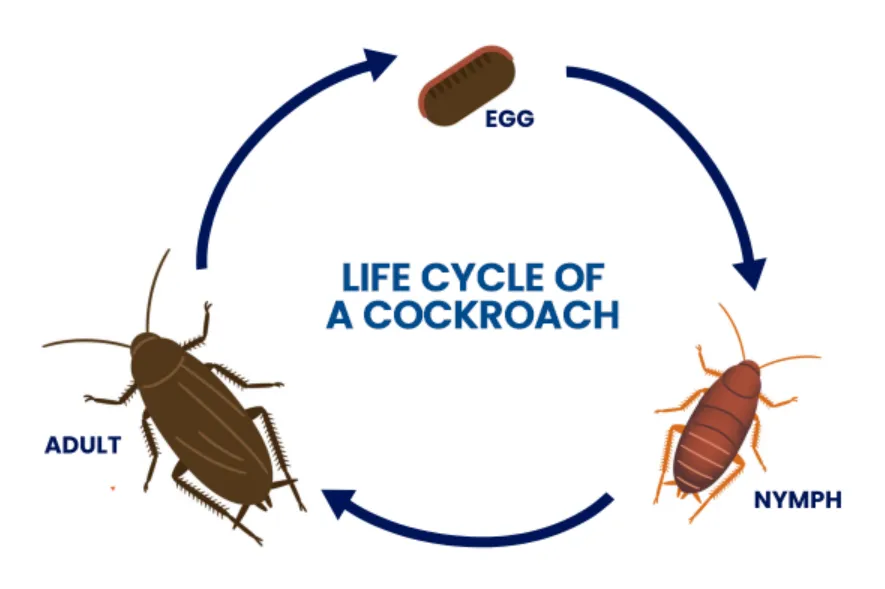
- Cockroaches undergo a three-stage life cycle: egg, nymph, and adult. The nymphs resemble smaller versions of the adult cockroach and molt several times before reaching adulthood.
- How long does a cockroach live?
- On average, a cockroach can live from 1 month to 1 year, depending on the species and environmental factors. The German cockroach, for instance, lives about 100-200 days.
- Why are cockroaches so difficult to get rid of?
- Cockroaches are resilient creatures that can survive harsh conditions. They are nocturnal, quick to hide, and can survive without food for a month. This survival instinct makes them challenging pests to eliminate.
Quick Life Cycle Table
| Stage | Duration | Description |
| Egg | 1-2 months | Female cockroaches carry egg cases (ootheca) that hatch into nymphs. |
| Nymph | 1-6 months | Nymphs emerge from the egg and molt several times, gradually resembling adults. |
| Adult | 1-2 years | Cockroaches reach adulthood, at which point they can reproduce and continue the cycle. |
The History of Their Scientific Naming
The scientific naming of cockroaches stems from their order, Blattodea, derived from the Latin word blatta, meaning “an insect that shuns light.” The term “cockroach” comes from the Spanish word cucaracha, which likely originated from the insect’s distinctive behavior of hiding in dark places.
Over time, various cockroach species have been classified based on their physical characteristics and habitats. The most common species in homes, Blattella germanica (German cockroach), was named in the 18th century. Their widespread adaptability has enabled them to be found on virtually every continent, with more than 4,500 species identified globally.
Their Evolution and Their Origin
Cockroaches have been around for more than 300 million years, making them one of the oldest surviving insect species. Their evolutionary history reveals they once thrived in the prehistoric forests, where they were much larger than today’s species. Over time, cockroaches adapted to diverse environments, from the humid tropics to arid deserts. Their flat bodies and long antennae enabled them to navigate narrow crevices, helping them survive even in harsh urban settings.
The evolution of cockroaches also led to the development of their highly evolved survival mechanisms. Their ability to go without food for long periods, the production of ootheca (egg cases) for reproduction, and their high mobility have all contributed to their resilience. Some cockroach species, such as the German cockroach, have become notorious pests in human dwellings, especially in homes and restaurants, where they feed on food scraps and contribute to the spread of disease.
Their Main Food and Its Collection Process
Cockroaches are omnivores, meaning they feed on both plant and animal matter. Their food sources include decaying organic material, crumbs, garbage, and even glue from books and wallpaper. They are opportunistic feeders that scavenge for food, often at night when they are most active.
Food Collection Process:
- Scavenging: Cockroaches search for food in dark, hidden places, such as cracks, crevices, and under appliances.
- Consumption: They feed on a wide range of food, from rotting food to small insects, contributing to their role as decomposers in the ecosystem.
- Food Storage: Some species, like the German cockroach, are known to carry food back to their hiding spots to feed on later.
Their Life Cycle and Ability to Survive in Nature
Cockroach Life Cycle
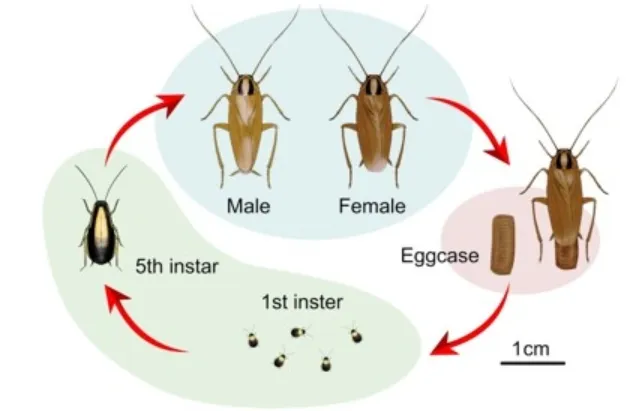
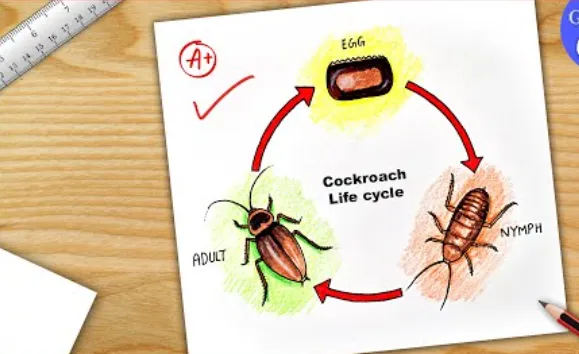
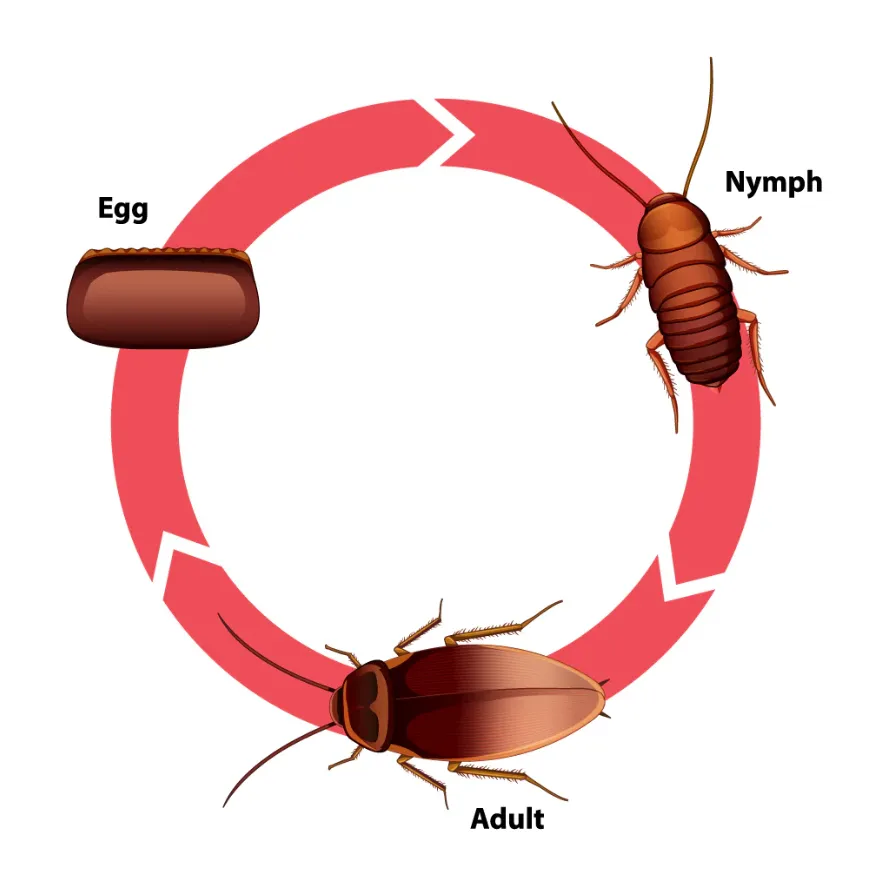
A cockroach’s life cycle comprises three stages: egg, nymph, and adult. The cycle begins when a female cockroach produces an egg case containing several fertilized eggs. Once hatched, nymphs resemble miniature versions of the adult cockroach but cannot reproduce. Over time, the nymphs molt and grow until they reach adulthood.
Survival in Nature:
Cockroaches have an extraordinary ability to survive in the wild due to their adaptability. They can thrive in diverse habitats, from forests to urban environments, due to their hard exoskeleton, which protects them from predators. They also have a well-developed sense of smell, allowing them to locate food sources efficiently. Their rapid reproduction rate ensures that even in the harshest environments, their species persists.
Their Reproductive Process and Raising Their Children
Cockroaches are prolific breeders. The female cockroach produces an ootheca, which can contain up to 50 eggs, depending on the species. After mating, she carries this egg case until it’s ready to hatch. Once the eggs hatch, the nymphs are born fully formed, though they are smaller and more vulnerable than adults.
Reproductive Process:
- Mating: Cockroaches typically mate in dark, secluded environments.
- Egg Laying: The female lays an egg case, which she carries for a few weeks before depositing it in a safe location.
- Nymph Development: After hatching, the nymphs go through several molts before maturing into adult cockroaches.
Importance of Them in This Ecosystem
Ecosystem Role of Cockroaches
Cockroaches play a significant role in the ecosystem as scavengers and decomposers. They help break down organic matter, including dead plants and animals, which in turn helps recycle nutrients back into the soil. This ecological role is vital for maintaining healthy ecosystems, as it prevents the accumulation of waste and supports decomposition.
Additionally, cockroaches serve as a food source for many animals, including birds, small mammals, and reptiles. Their presence in food chains is crucial for the survival of these predators. Despite their reputation as pests, cockroaches contribute significantly to ecosystem biodiversity and function.
What to Do to Protect Them in Nature and Save the System for the Future
To ensure that cockroaches continue to play their role in nature without becoming a nuisance in urban areas, it is essential to promote environmental balance. Here are a few ways to protect them in nature:
- Preserve their natural habitats: Avoid destroying ecosystems like forests and wetlands where cockroaches thrive.
- Minimize chemical use: Avoid excessive pesticide usage in urban areas, as it can disrupt their natural survival patterns.
- Reduce waste: Manage waste effectively in urban areas to prevent excess food that attracts roaches.
Frequently Asked Questions (FAQs)
- How long do baby roaches live?
- Baby roaches, or nymphs, typically live for several months before reaching adulthood.
- What are wood roaches?
- Wood roaches are a type of cockroach found in forests and wooded areas. Unlike their urban counterparts, they do not typically invade homes.
- How fast can a cockroach reproduce?
- A female cockroach can produce several egg cases in her lifetime, each containing up to 50 eggs, leading to rapid population growth.
- Are German roaches dangerous?
- German roaches can spread bacteria and allergens that can cause health problems, making them a concern in homes and restaurants.
- What do cockroaches eat?
- Cockroaches eat almost anything, including food scraps, decaying organic matter, and even glue.
- Why do cockroaches like dark places?
- Cockroaches are nocturnal creatures, meaning they are most active at night and prefer dark, hidden places where they can find food and shelter.
- Can cockroaches fly?
- Some cockroach species, like the American cockroach, have wings and are capable of flight, though they are not strong fliers.
- How can I keep cockroaches away from my home?
- Keeping your home clean, sealing entry points, and using traps can help prevent cockroach infestations.
Conclusion
Cockroaches are fascinating creatures with a life cycle and survival mechanisms that have allowed them to thrive for millions of years. Despite being considered pests, they play a vital role in nature by aiding in decomposition and serving as a food source for many animals.
By understanding their behavior, reproductive processes, and their ecological role, we can better appreciate their place in the natural world and manage their populations more effectively in urban environments. Their resilience is a testament to the wonders of evolution, and protecting them in their natural habitats helps maintain the balance of ecosystems.
Also Read: penguin life cycle