
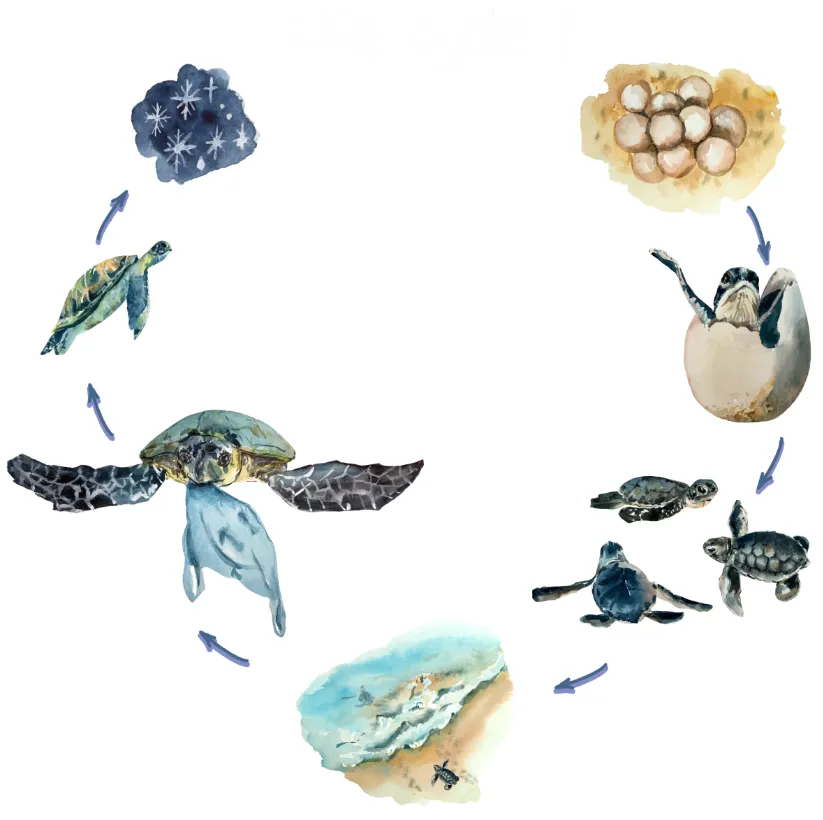
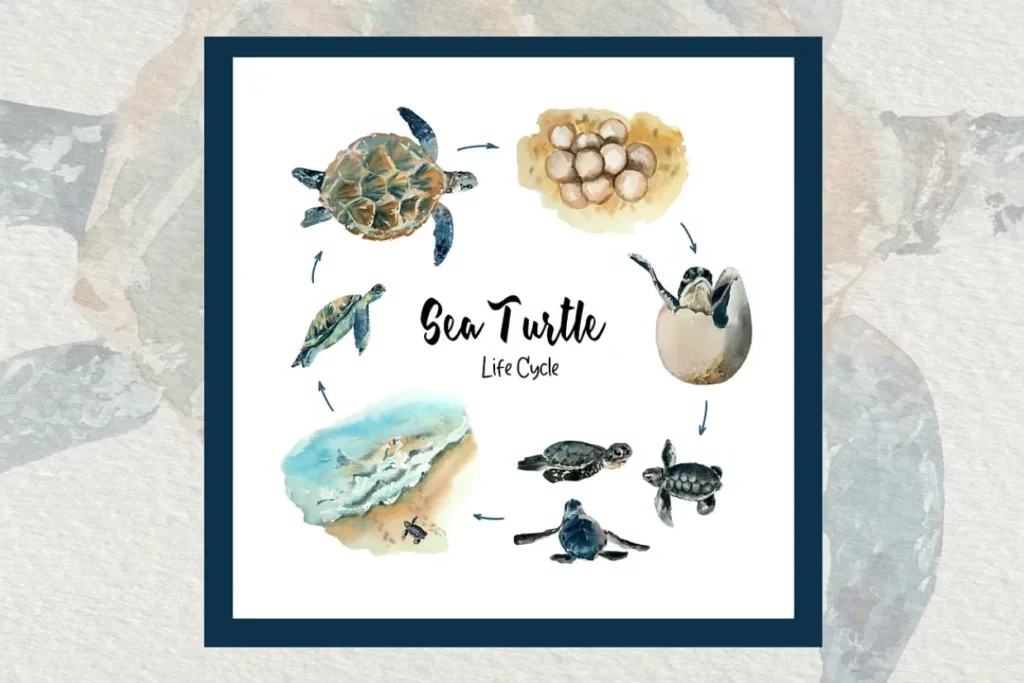
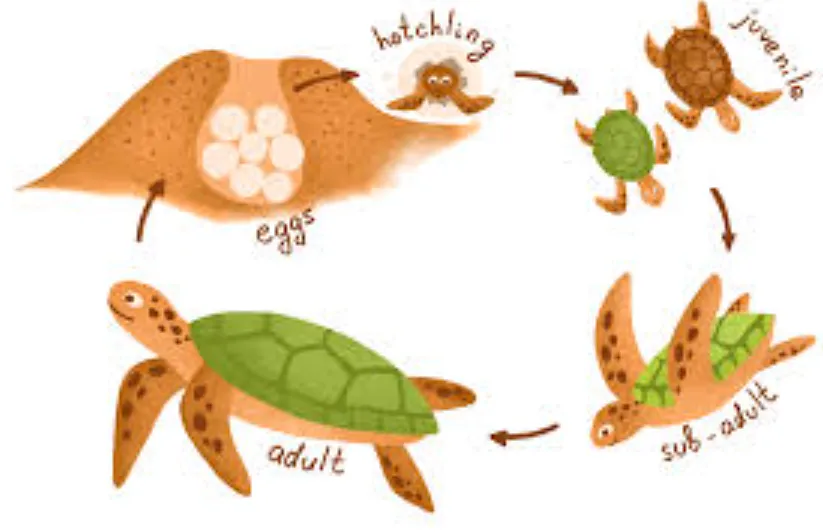
The life cycle of a turtle is one of the most fascinating journeys in the reptile world. A turtle begins life as an egg, hatches as a tiny young turtle, grows through a vulnerable juvenile stage, and finally becomes a mature adult capable of reproduction. Although the exact timing differs between sea turtles, freshwater turtles, and land-living tortoises, the basic pattern is similar: egg → hatchling → juvenile → adult.
Turtles belong to the reptile order Testudines, a group known for their protective bony shell. The upper shell is called the carapace, and the lower shell is called the plastron. There are more than 350 turtle species worldwide, living in oceans, rivers, ponds, wetlands, forests, grasslands, and islands.
Unlike mammals, turtles do not give birth to live young. Female turtles lay eggs on land, even when the species spends most of its life in water. For example, female sea turtles return to sandy beaches to nest, while freshwater turtles often dig nests in soil near wetlands. After incubation, hatchlings emerge and must survive predators, temperature changes, habitat loss, and human disturbance.
Q1. What are the main stages in the life cycle of a turtle?
A: The four main stages are egg, hatchling, juvenile, and adult turtle.
Q2. Do turtles give birth or lay eggs?
A: Turtles lay eggs. Even aquatic turtles must come onto land to nest.
Q3. How long does it take for turtle eggs to hatch?
A: Many sea turtle eggs incubate for about 45–65 days, though timing depends on species, sand temperature, moisture, and nest depth.
Quick Life Cycle Table
| Stage | What Happens | Common Time Range | Main Risks |
| Egg | Females lay eggs in sand, soil, or nesting ground | Often 45–90 days, depending on species | Flooding, predators, temperature, and nest damage |
| Hatchling | Baby turtle breaks out and moves toward water or cover | First hours to weeks | Birds, crabs, fish, mammals, dehydration |
| Juvenile | Young turtle grows, feeds, hides, and develops shell strength | Several years to decades | Predators, pollution, and habitat loss |
| Adult | Mature turtles feed, migrate, or defend territory, and reproduce | Species-dependent | Fishing gear, road mortality, hunting, and climate change |
The History Of Their Scientific Naming, Evolution, and Their Origin
Scientific Naming of Turtle
The word turtle is commonly used for shelled reptiles of the order Testudines. In different regions, people may use the words turtle, tortoise, and terrapin differently. In general, tortoises are land-dwelling turtles, terrapins often live in freshwater or brackish habitats, and sea turtles live in marine environments.
The formal group name Testudines comes from Latin roots linked with tortoises and shelled reptiles. Another historical name, Chelonia, is also used in scientific discussions. These names help scientists classify turtles based on anatomy, fossil history, and evolutionary relationships.
Evolution and Ancient Origin
Turtles are among the oldest surviving reptile groups. Fossil evidence shows that early turtle relatives appeared more than 200 million years ago, and some turtle-like ancestors go back even earlier. Britannica notes that the earliest turtle relatives are linked to the Late Permian period, and many ancient forms had features that were different from modern turtles, including teeth or incomplete shell structures.
How the Shell Changed Their Survival
The turtle shell is not just an outer covering. It is part of the skeleton, formed mainly from bone and cartilage. This shell helped turtles survive by providing strong protection against predators and environmental pressures. Over millions of years, turtles adapted to oceans, rivers, swamps, deserts, forests, and islands.
Important Things That You Need To Know
Understanding the life cycle of turtles becomes easier when you know the main types of turtles and how their lifestyles differ. The word “turtle” is broad and can include marine, freshwater, and land-based species. Each group follows the same basic life cycle, but their habitats, diets, growth rates, and threats may differ greatly.
A sea turtle spends most of its life in the ocean but must come to land for nesting. Sea turtle hatchlings usually crawl from the beach to the sea and then spend their early life in open-water habitats before moving into coastal feeding areas. NOAA explains that green turtle hatchlings move offshore, juveniles later travel to shallow coastal feeding grounds, and adults remain in nearshore habitats for much of their lives.
A freshwater turtle may live in ponds, lakes, rivers, canals, wetlands, or marshes. These turtles often bask on logs or rocks to regulate body temperature. They may eat aquatic plants, insects, fish, snails, worms, and carrion, depending on species.
A tortoise is usually land-based and often has strong legs, a heavier shell, and a diet rich in grasses, leaves, flowers, and fruits. A baby turtle, also called a hatchling, is usually very vulnerable because its shell is still developing, and many predators target it.
The most important point is this: turtles grow slowly, mature late, and often live long lives. This means adult survival is extremely important for stable turtle populations. When humans remove adult turtles, destroy nesting areas, pollute water, or disturb beaches, the entire life cycle becomes weaker.
Their Reproductive Process, Giving Birth And Rising Their Children
Mating and Fertilization
Turtles reproduce through internal fertilization. Males and females usually mate in water for aquatic species, while land tortoises mate on land. In sea turtles, mating often happens near nesting beaches or during migration periods before females come ashore.
After mating, the female develops eggs inside her body. Some turtle species can store sperm for a period, allowing fertilization even after mating. This gives turtles a reproductive advantage when mates are not always available.
Nesting and Egg-Laying
Turtles do not give birth to live young. The female digs a nest using her hind limbs and deposits eggs into the chamber. Sea turtles usually nest on sandy beaches, while freshwater turtles often nest in loose soil, on riverbanks, in dunes, or on sunny, open ground near water.
Many sea turtle nests contain around 80–120 eggs, though clutch size varies by species and individual condition. After laying, the female covers the nest and usually leaves. She does not feed or guard the hatchlings as mammals or birds do.
Incubation and Temperature Effect
Turtle eggs develop inside the nest. In many turtles, temperature can influence sex development. Warmer nests often produce more females, while cooler nests may produce more males. This makes climate change a serious issue because hotter nesting beaches can disturb natural sex ratios.
Raising Their Children
Most turtles do not raise their babies. Once the eggs are laid and covered, the young must survive independently. Hatchlings rely on instinct to dig upward, reach water or shelter, avoid predators, and begin feeding.
Stages of the Life Cycle of a Turtle
1. Egg Stage
The egg stage begins when the female turtle lays eggs in a nest. The nest must have suitable temperature, moisture, and oxygen. If the nest is too wet, eggs may drown. If it is too dry or too hot, embryos may fail to develop properly.
This stage is extremely important because the future population depends on successful nesting. Natural predators such as raccoons, foxes, crabs, birds, monitor lizards, and ants may eat turtle eggs. Human threats include beach driving, artificial lighting, construction, sand mining, and accidental nest destruction.
2. Hatchling Stage
The hatchling stage begins when the baby turtle breaks the eggshell using a temporary egg tooth. Sea turtle hatchlings often emerge together at night and move toward the brightest natural horizon, usually the reflection of moonlight over the ocean.
This stage is dangerous. Many hatchlings are eaten before they reach water. In cities or tourist beaches, artificial lights can confuse hatchlings and lead them away from the sea. For freshwater turtles, hatchlings must quickly find cover in vegetation, mud, leaf litter, or shallow water.
3. Juvenile Stage
The juvenile stage is a long period of growth. Young turtles feed actively, avoid predators, and develop stronger shells. Sea turtles may spend years in oceanic habitats before moving into coastal feeding grounds. This early ocean period is sometimes called the “lost years” because it is difficult for scientists to track.
Juveniles are more independent than hatchlings, but they still face major risks. Plastic waste, fishing hooks, boat strikes, poor water quality, and habitat destruction can reduce survival.
4. Adult Stage
The adult turtle is sexually mature and can reproduce. Many turtles take years or decades to reach this stage. Sea turtles often migrate long distances between feeding grounds and nesting beaches. Green turtles, for example, may mature at around 25–35 years and can live 70 years or more.
Adults are essential for population stability. Since turtles mature slowly, losing adult females can damage a population for many years.
Their Main Diet, Food Sources, And Collection Process Explained
Turtle diets vary widely because different species live in different habitats. Some turtles are herbivores, some are carnivores, and many are omnivores. Their diet often changes with age. Hatchlings and juveniles may eat more protein for growth, while adults may shift toward plants or specialized prey.
- Sea turtles: Diet depends on species. Green turtles are mostly herbivorous as adults and feed on seagrass and algae. Their grazing helps keep seagrass beds productive. Loggerhead turtles have strong jaws and eat hard-shelled prey such as conchs, bivalves, horseshoe crabs, shrimp, jellyfish, sponges, and fish.
- Freshwater turtles: Many eat insects, worms, snails, fish, tadpoles, aquatic plants, fruits, and decaying organic matter. They collect food by biting, chasing small prey, digging in the mud, or picking plants.
- Tortoises: Most tortoises eat grasses, weeds, leaves, flowers, cactus pads, and fruits. They collect food slowly by grazing and browsing.
- Baby turtles: Hatchlings often begin with tiny insects, larvae, soft plants, algae, or small aquatic animals, depending on species.
Turtles are not random feeders. Their jaws, beak shape, habitat, swimming ability, and digestive system all influence what they can eat. For example, a softshell turtle may ambush fish and small aquatic prey, while a grazing tortoise may spend hours moving through vegetation.
How Long Does A Turtle Live
The lifespan of a turtle depends strongly on species, habitat, diet, genetics, disease, and human pressure. Turtles are famous for living long lives, but not all turtles live for a century. Some small species may live a few decades, while large tortoises can live well beyond 100 years.
- Sea turtles usually live for decades. WWF estimates the natural lifespan of sea turtles at 50–100 years, although exact ages are difficult to confirm due to the challenges of long-term tracking.
- Green turtles are especially long-lived. NOAA states that green turtles can live for at least 70 years, and females often reach maturity at 25–35 years.
- Some freshwater turtles also live long lives. Documented ages include eastern box turtles over 100 years old in the wild, Blanding’s turtles up to 75 years old, and alligator snapping turtles and wood turtles up to around 60 years old.
- Captive turtles may live long only with proper care. A turtle in captivity needs correct temperature, UVB light, clean water, proper diet, space, calcium, hiding areas, and veterinary support.
- Wild turtles face more natural dangers. Eggs and hatchlings have high mortality because predators consume many of them. Survival improves as turtles reach adulthood because their shells become stronger.
- Large tortoises are among the longest-living land animals. Some giant tortoises can live for more than 100 years, but this is not true for every turtle species.
- Human threats reduce lifespan. Road accidents, fishing gear, plastic pollution, illegal trade, habitat destruction, and water contamination can kill turtles long before they reach old age.
In simple terms, a turtle can live for 20 years or more, depending on the species and conditions. The safest answer for the general keyword life cycle of turtles is: turtles are usually long-lived reptiles, but their survival depends heavily on habitat protection and adult survival.
Turtle Lifespan in the Wild vs. in Captivity
Lifespan in the Wild
In the wild, turtles live in natural ecosystems where they can feed, migrate, bask, hibernate, nest, and reproduce in accordance with natural cycles. Wild turtles may have stronger behavior patterns and better natural movement, but they also face predators, disease, drought, storms, pollution, fishing gear, and habitat loss.
For sea turtles, survival is especially difficult during the egg and hatchling stages. Many hatchlings never reach adulthood. However, those that survive to maturity can live for decades and continue reproducing for many years.
Lifespan in Captivity
Captive turtles can live long lives when care is excellent. They may be protected from predators, starvation, and some environmental hazards. However, captivity can also shorten life if care is poor. Common problems include dirty water, shell rot, vitamin deficiency, weak bones, stress, obesity, and lack of UVB light.
A captive turtle is not an easy pet. Because many species live for decades, keeping a turtle requires long-term responsibility, legal awareness, proper enclosure design, and species-specific knowledge.
Which Is Better?
Wildlife is better for wild turtles when their ecosystem is healthy. Captivity should not be treated as a simple alternative unless it involves rescue, conservation breeding, legal ownership, or professional care.
Importance of the Turtle in this Ecosystem
They Maintain Seagrass Beds
Sea turtles, especially green turtles, graze on seagrass. This grazing keeps seagrass healthy, supports nutrient cycling, and benefits many marine animals. WWF describes sea turtles as a fundamental link in marine ecosystems because they help maintain seagrass beds and coral reefs.
They Support Coral Reef Balance
Some sea turtles eat sponges and other reef organisms. Hawksbill turtles, for example, help control sponge growth on reefs, allowing corals more space to grow. This supports reef biodiversity and helps maintain habitat for fish and invertebrates.
They Move Nutrients Between Habitats
When turtles nest, they bring nutrients from the sea to beaches. Unhatched eggs, eggshells, and hatchling remains can enrich beach and dune ecosystems. These nutrients support plants, insects, birds, and other coastal life.
They Help Food Web Stability
Turtle eggs and hatchlings are food for many animals. Adult turtles also influence food webs through grazing, predation, scavenging, and habitat movement.
They Support Human Communities
Turtles have cultural, educational, tourism, and conservation value. Healthy turtle populations can support eco-tourism, beach conservation, and public awareness about marine and freshwater ecosystems.
What to do to protect them in nature and save the system for the future
Protect Nesting Areas
- Keep beaches, riverbanks, and nesting grounds undisturbed during breeding season.
- Avoid driving vehicles on nesting beaches because ruts can trap hatchlings and damage nests. NOAA specifically warns that beach driving can harm nesting turtles, hatchlings, and incubating nests.
- Do not dig up turtle nests or move eggs without a trained conservation authority.
Reduce Plastic and Water Pollution
- Avoid single-use plastics near rivers, beaches, lakes, and oceans.
- Dispose of fishing lines, nets, hooks, and packaging safely.
- Support clean-water policies because turtles can mistake plastic for food.
Control Artificial Light Near Beaches
- Turn off unnecessary lights during nesting and hatching seasons.
- Use turtle-friendly lighting near coastal areas.
- Keep curtains closed in beachfront buildings because hatchlings can follow artificial light away from the sea.
Protect Adult Turtles
- Support fishing practices that reduce bycatch.
- Use turtle excluder devices where required.
- Drive carefully near wetlands and nesting roads because freshwater turtles often cross roads to lay eggs.
Stop Illegal Trade and Egg Collection
- Do not buy turtle meat, eggs, shells, or illegal pets.
- Report poaching or illegal wildlife trade to local authorities.
- Support conservation groups that protect nests, rescue injured turtles, and restore habitats.
Fun & Interesting Facts About Turtle
- Turtles are reptiles, not amphibians, because they breathe air, have scales, and lay amniotic eggs.
- A turtle’s shell is part of its skeleton, not a removable covering.
- The top shell is called the carapace, and the bottom shell is called the plastron.
- Many turtles can feel pressure and touch through their shells because nerves are connected to shell tissues.
- Some turtles live in oceans, some in freshwater, and some on land.
- Sea turtles can migrate thousands of miles between feeding and nesting areas.
- Female sea turtles often return to the same general beach area where they hatched.
- Turtle eggs are affected by nest temperature, and temperature can influence whether more males or females develop.
- Hatchlings often emerge at night to reduce heat stress and predator risk.
- Turtles have no teeth. Instead, they use strong beak-like jaws to bite, crush, cut, or graze food.
- Some turtles hibernate or slow down their metabolism during cold seasons.
- Large tortoises are among the longest-living land animals.
Frequently Asked Questions (FAQs)
Q1. What is the life cycle of a turtle?
A: The life cycle of a turtle includes four main stages: egg, hatchling, juvenile, and adult. The turtle starts inside an egg, hatches as a baby, grows through a juvenile stage, and finally becomes a mature adult that can reproduce.
Q2. How many eggs does a turtle lay?
A: It depends on the species. Some freshwater turtles lay only a few eggs, while many sea turtles lay large clutches. Sea turtle nests often contain around 80–120 eggs, though numbers vary by species.
Q3. How long does a turtle take to become an adult?
A: Some smaller turtles mature in a few years, but many sea turtles take decades. NOAA notes that green turtle females usually mature at 25–35 years old.
Q4. What do baby turtles eat?
A: Baby turtles may eat tiny insects, larvae, worms, algae, soft plants, small aquatic animals, or floating organic matter. Diet depends on whether the turtle is marine, freshwater, or land-based.
Q5. Why are turtles important to the ecosystem?
A: Turtles help maintain seagrass beds, coral reefs, freshwater food webs, nutrient cycling, and beach ecosystems. Sea turtles are especially important because they connect marine and coastal habitats.
Conclusion
The life cycle of a turtle is a powerful example of patience, survival, and ecological balance. From a hidden egg in sand or soil to a tiny hatchling facing predators, every stage of a turtle’s life is filled with challenges. The juvenile stage is a period of growth and learning, while the adult stage is essential for reproduction and long-term population survival.
Turtles are more than slow-moving reptiles with shells. They are important ecosystem engineers, nutrient movers, grazers, predators, scavengers, and symbols of healthy habitats. Their long lifespan also means they need long-term protection. When nesting beaches, wetlands, rivers, oceans, and forests are damaged, the entire turtle life cycle becomes threatened.
Protecting turtles means protecting the natural systems that support many other species, including humans. By reducing pollution, protecting nests, stopping illegal trade, and respecting turtle habitats, we can help future generations continue to see these ancient reptiles thrive in the wild.
Also Read: cockroach life cycle