
The termite life cycle is one of the most fascinating yet destructive processes in the insect world. Termites are small, social insects that live in colonies and are known for feeding on wood and cellulose materials. Understanding their life cycle is essential not only for scientific knowledge but also for effective termite control and prevention.
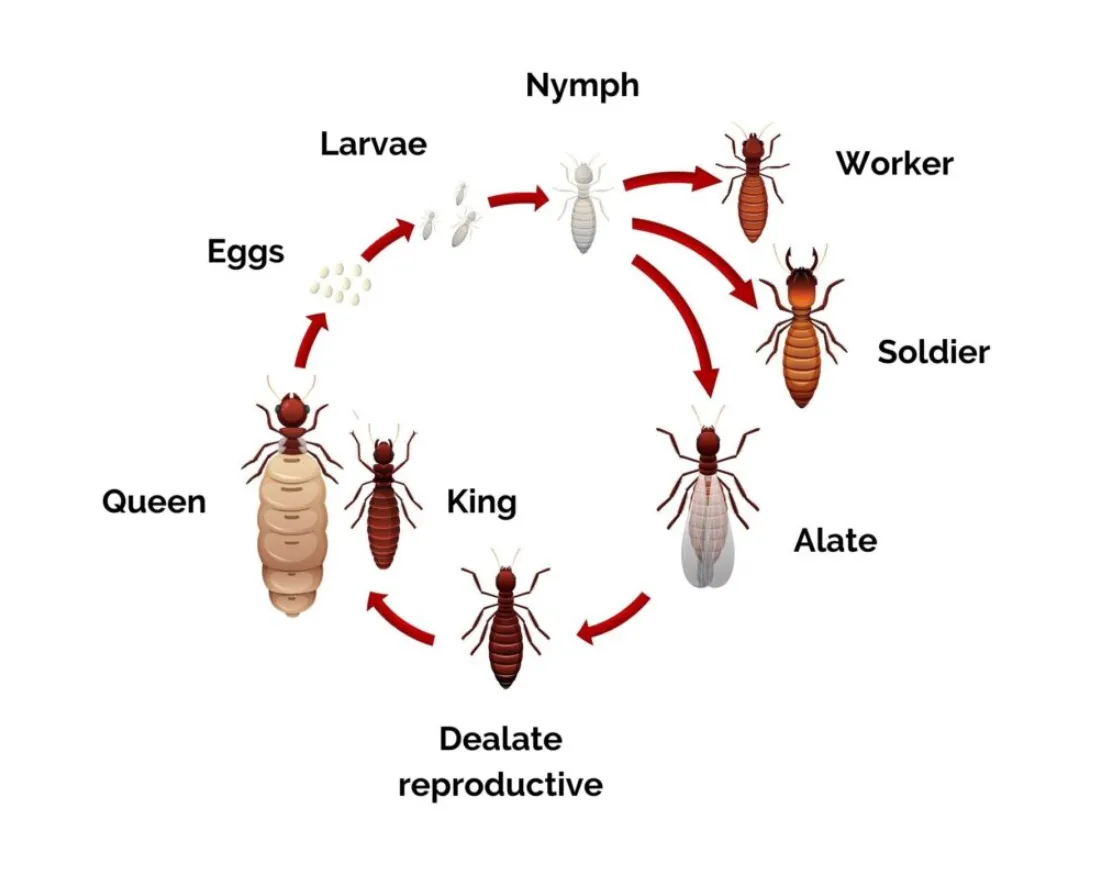
Termites go through several stages of development, from eggs to fully mature adults, each playing a specific role within the colony. Their organized social structure includes workers, soldiers, and reproductive termites, all contributing to the colony’s survival and expansion.
Quick Answers (Most Common Questions)
1. How long is the termite life cycle?
The termite life cycle can last from 1 to 5 years, depending on the species and environmental conditions.
2. What are the stages of a termite’s life cycle?
Termites go through three main stages: egg, nymph, and adult (worker, soldier, or reproductive).
3. Can termites multiply quickly?
Yes, a single queen can lay thousands of eggs daily, causing rapid colony growth if left untreated.
Quick Life Cycle Table
| Stage | Description | Duration |
| Egg | Tiny, white, oval-shaped eggs | 1–2 weeks |
| Nymph | Immature termites that develop into different roles | Several weeks–months |
| Worker | Responsible for feeding and building | 1–2 years |
| Soldier | Protects the colony | 1–2 years |
| Reproductive | Includes king and queen termites | Up to 10+ years |
The History Of Their Scientific Naming
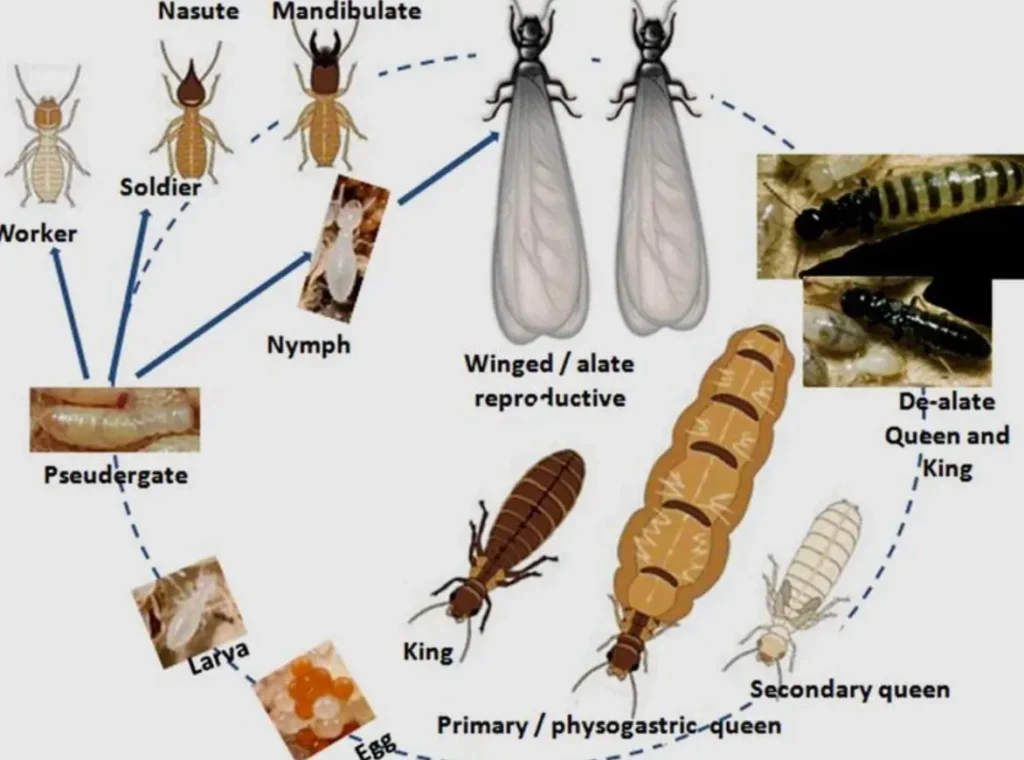
The scientific classification of termites has evolved significantly over time. Originally, termites were classified under the order Isoptera, which means “equal wings,” referring to the similar size of their front and hind wings.
- Early entomologists grouped termites separately due to their unique social behavior.
- Later research revealed that termites share a close evolutionary relationship with cockroaches.
- As a result, termites are now classified under the order Blattodea, along with cockroaches.
- The family Termitidae is the largest and most diverse termite family.
- Scientists use taxonomy to differentiate between species like subterranean, drywood, and dampwood termites.
This reclassification reflects a deeper understanding of termite genetics, anatomy, and behavior. It also highlights their ecological importance and evolutionary history.
Their Evolution And Their Origin
Termites are ancient insects that date back over 100 million years. Fossil evidence shows that their ancestors lived during the time of dinosaurs, making them one of the oldest social insect groups.
Scientists believe termites evolved from wood-feeding cockroach-like insects. Over time, they developed complex social systems, including division of labor and cooperative living.
Key evolutionary traits include:
- Development of symbiotic relationships with gut microorganisms that help digest cellulose.
- Adaptation to different environments such as forests, deserts, and urban areas.
- Evolution of specialized castes like workers, soldiers, and reproductives.
Their ability to break down tough plant material has made them essential decomposers in ecosystems. Despite being pests in human environments, termites play a vital role in nutrient recycling and soil formation.
Their Main Food and Its Collection Process
Termites primarily feed on cellulose, a component found in plant materials. This includes wood, paper, cardboard, and even certain fabrics.
Main Food Sources
- Wood (dead trees, timber, furniture)
- Leaf litter and grass
- Paper and cardboard
- Plant roots
- Decaying organic matter
Food Collection Process
- Worker termites leave the colony to search for food.
- They use chemical trails (pheromones) to guide others to food sources.
- Once found, workers chew and break down the material.
- The food is shared within the colony through a process called trophallaxis (mouth-to-mouth feeding).
- Microorganisms in their gut help digest cellulose efficiently.
This efficient system ensures that all members of the colony are fed and sustained.
Important Things That You Need To Know
Understanding termites is crucial for both homeowners and environmental enthusiasts. Here are some important facts related to LSI keywords:
Termite and Their Identification
A termite is often mistaken for ants but has straight antennae and a uniform body. Knowing what a termite looks like helps in early detection.
Termite Inspection
Regular termite inspection is essential to detect infestations early. Professionals look for mud tubes, damaged wood, and live insects.
Termite Droppings
Termite droppings, also known as frass, are small pellet-like waste materials. Their presence indicates active infestation, especially in drywood termites.
Termite Control Methods
Effective termite control near me includes chemical treatments, bait systems, and physical barriers. These methods help eliminate colonies and prevent future damage.
Termite Treatment Options
Professional termite treatment near me services use advanced techniques such as soil treatments, fumigation, and eco-friendly solutions.
Understanding these factors can save thousands in repair costs and help maintain a termite-free environment.
Their Life Cycle and Ability to Survive in Nature
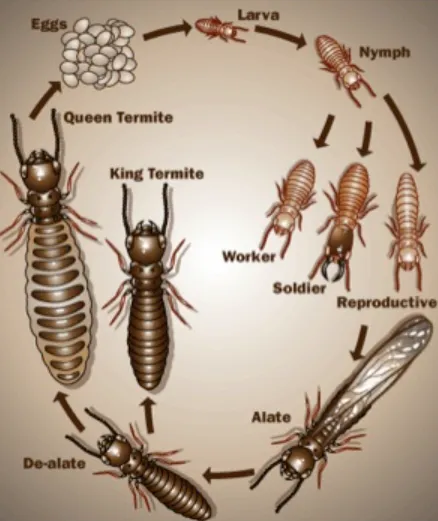
Egg Stage
The queen lays thousands of eggs, ensuring rapid colony growth. Eggs are kept safe inside the nest.
Nymph Stage
Nymphs hatch from eggs and develop into different castes based on colony needs.
Worker Stage
Workers gather food, build tunnels, and care for young termites.
Soldier Stage
Soldiers protect the colony from predators like ants.
Reproductive Stage
Winged termites (alates) leave the colony to form new colonies.
Termites survive due to their adaptability, social cooperation, and ability to find food sources efficiently.
Their Reproductive Process and Raising Their Children
Termites have a highly organized reproductive system that ensures colony expansion.
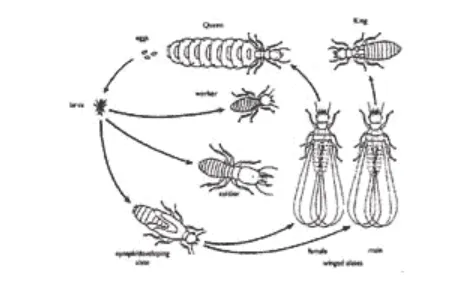
- The queen is the primary egg-layer, producing thousands of eggs daily.
- The king stays with the queen for life, continuously mating.
- Winged termites (alates) swarm during specific seasons to form new colonies.
- After mating, they shed wings and become new kings and queens.
- Eggs hatch into nymphs, which are cared for by worker termites.
- Workers feed and groom the young termites.
- The colony regulates caste development based on environmental needs.
This structured system ensures the survival and growth of termite populations.
Importance of Them in this Ecosystem
Nutrient Recycling
Termites break down dead wood and plant materials, returning nutrients to the soil.
Soil Formation
Their tunneling activity improves soil structure and aeration.
Food Source
They serve as food for birds, reptiles, and other insects.
Ecosystem Balance
Termites help maintain ecological balance by decomposing organic matter.
Despite their destructive nature in homes, termites are essential for environmental health.
What to do to protect them in nature and save the system for the future
- Preserve natural habitats like forests and grasslands
- Avoid excessive pesticide use that harms beneficial insects
- Promote sustainable forestry practices
- Support biodiversity conservation efforts
- Educate communities about the ecological role of termites
- Use eco-friendly termite control methods
- Protect soil health and natural ecosystems
- Encourage research on termite conservation
Frequently Asked Questions (FAQs)
1. What is the lifespan of a termite?
Worker termites live 1–2 years, while queens can live over 10 years.
2. How fast do termites reproduce?
A queen can lay thousands of eggs per day, leading to rapid population growth.
3. What attracts termites to homes?
Moisture, wood, and food sources attract termites.
4. Are termite bites dangerous?
Termite bites are rare and not harmful to humans.
5. How can I identify termite damage?
Look for hollow wood, mud tubes, and droppings.
6. When do termites swarm?
Usually, during warm seasons, it often occurs after rain.
7. Can termites be eliminated?
Yes, with professional treatment and prevention methods.
8. Do termites only eat wood?
No, they also consume paper, cardboard, and plant materials.
Conclusion
The termite life cycle is a complex and highly efficient process that allows these tiny insects to thrive in various environments. From eggs to fully developed adults, each stage plays a vital role in the survival of the colony. Their ability to reproduce rapidly and adapt to changing conditions makes them both fascinating and challenging to control.
While termites can cause significant structural damage to homes, they are also crucial contributors to the ecosystem. By understanding their behavior, life cycle, and ecological importance, we can manage infestations effectively while preserving their role in nature.
Proper termite inspection, timely termite treatment, and awareness are key to preventing damage. At the same time, promoting eco-friendly practices ensures a balance between human needs and environmental sustainability.
Also Read: roach life cycle