
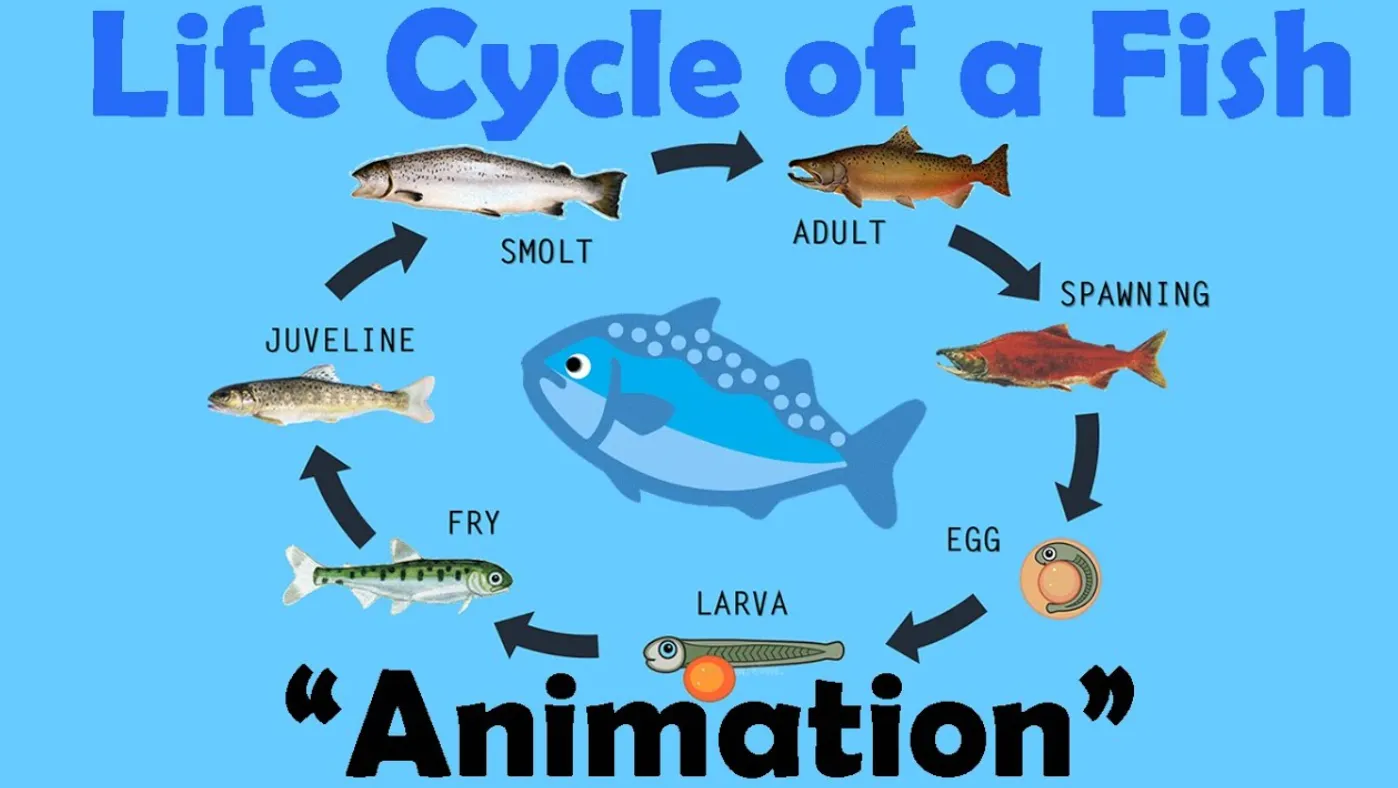
The fish’s life cycle is a fascinating natural process that shows how fish grow, reproduce, and survive in aquatic environments. From tiny eggs to fully developed adults, fish go through several stages that vary depending on species, habitat, and environmental conditions. Understanding the life cycle of fish helps us protect aquatic ecosystems and manage fisheries sustainably.
Fish are among the oldest living vertebrates on Earth, and their life cycles are adapted to both freshwater and marine environments. Whether you’re a student, researcher, or nature enthusiast, learning about fish development gives valuable insight into biodiversity and environmental balance.
Quick Answers (Most Common Questions)
1. What is a fish’s life cycle?
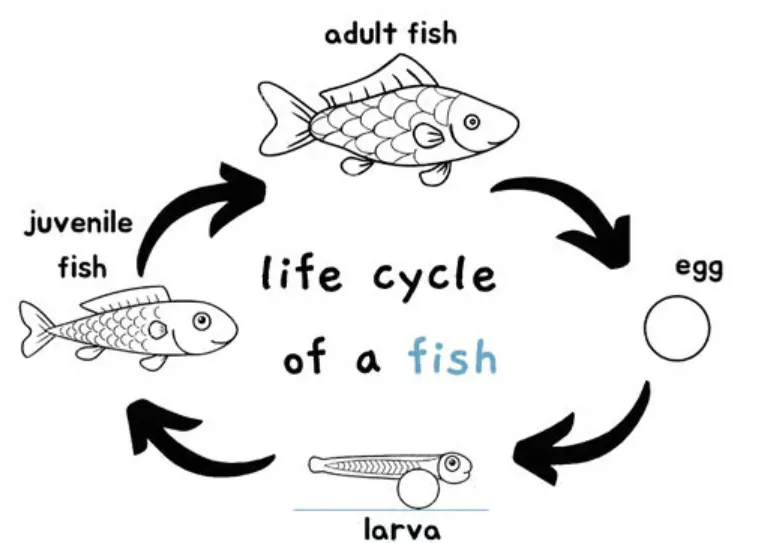
A fish’s life cycle is the series of stages a fish goes through from egg → larva → juvenile → adult → reproduction.
2. How long does the fish’s life cycle take?
It varies by species—some fish complete it in weeks, while others take several years.
3. Do all fish lay eggs?
Most fish lay eggs, but some species give birth to live young.
Quick Life Cycle Table
| Stage | Description | Duration (Approx.) |
| Egg | Fertilized eggs develop in water | A few days to weeks |
| Larva | Tiny fish with a yolk sac, limited movement | 1–3 weeks |
| Juvenile | Starts resembling adult fish | Weeks to months |
| Adult | Fully developed and reproductive | Months to years |
| Reproduction | Spawning or live birth occurs | Seasonal |
The History Of Their Scientific Naming
The scientific naming of fish has a long history rooted in taxonomy and biological classification. Scientists use binomial nomenclature to identify and classify fish species.
- Carl Linnaeus developed the system in the 18th century.
- Fish belong to the kingdom Animalia and phylum Chordata.
- They are divided into major classes such as Osteichthyes (bony fish) and Chondrichthyes (cartilaginous fish).
- Scientific names are written in Latin, such as Salmo salar (Atlantic salmon).
- This naming system helps scientists worldwide communicate clearly about species.
Over time, classification has evolved with genetic research, helping scientists understand fish evolution and relationships more accurately. Today, modern taxonomy combines physical traits with DNA analysis.
Their Evolution And Their Origin
Fish are among the earliest vertebrates, with fossil records dating back over 500 million years. They evolved during the Cambrian period and have diversified into thousands of species.
Early fish were jawless and simple in structure. These primitive fish later evolved into more complex forms with jaws, fins, and improved mobility. The development of jaws was a major evolutionary step, allowing fish to become efficient predators.
Over millions of years, fish adapted to different environments:
- Freshwater rivers and lakes
- Deep ocean habitats
- Coral reefs and coastal zones
Cartilaginous fish like sharks evolved differently from bony fish, developing flexible skeletons made of cartilage. Meanwhile, bony fish developed stronger skeletons and swim bladders for buoyancy.
Fish evolution also played a key role in the emergence of land animals. Some ancient fish species developed limb-like fins, eventually leading to amphibians.
Today, fish represent the most diverse group of vertebrates, showing remarkable adaptability and survival strategies.
Their Main Food and Its Collection Process
Fish have diverse feeding habits depending on their species, size, and environment. Their diet plays a crucial role in their growth and life cycle.
Types of Food Fish Eat
- Plankton – Tiny organisms consumed by small fish
- Algae and plants – Common for herbivorous fish
- Insects and larvae – Found in freshwater environments
- Small fish and crustaceans – For carnivorous species
Food Collection Process
- Fish use their mouth shape and teeth to capture food
- Some filter-feed using gills (like whale sharks)
- Predatory fish hunt actively using speed and vision
- Bottom feeders search the sediments for food
Fish’s feeding behavior is adapted to their environment. For example, deep-sea fish rely on bioluminescence to attract prey, while reef fish depend on coral ecosystems.
Proper nutrition helps fish grow from larvae to adults and ensures successful reproduction.
Important Things That You Need To Know
Understanding the fish’s life cycle requires knowledge of several key concepts. These important terms help explain how fish grow and survive.
Key Concepts Explained
- fish life cycle stages – Egg, larva, juvenile, adult
- fish reproduction – Spawning or live birth
- aquatic ecosystem – an environment where fish live
- fish larvae – Early stage after hatching
- fish habitat – Freshwater or marine living area
Fish life cycles are influenced by temperature, water quality, and food availability. Seasonal changes often trigger reproduction, especially in species like salmon.
Migration is another important factor. Some fish travel long distances to reproduce, ensuring the survival of their species.
Their Life Cycle and Ability to Survive in Nature
Fish have developed complex life cycles that allow them to survive in diverse environments.
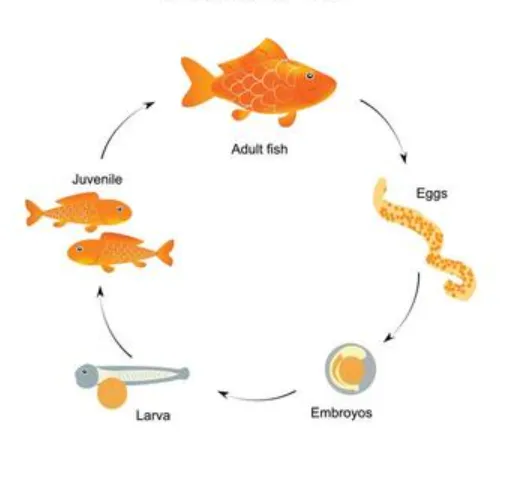
Egg Stage
Fish eggs are laid in water and may float or attach to surfaces. Some species produce thousands of eggs to increase survival chances.
Larval Stage
Larvae hatch with a yolk sac for nutrition. They are weak swimmers and highly vulnerable to predators.
Juvenile Stage
Juveniles begin feeding independently and develop fins and scales. They start resembling adult fish.
Adult Stage
Adult fish are fully developed and capable of reproduction. They adapt to environmental changes and avoid predators.
Fish survival depends on factors like water temperature, oxygen levels, and food supply. Their ability to adapt ensures their existence across millions of years.
Their Reproductive Process and Raising Their Children
Fish reproduction varies widely among species, but most follow a general pattern.
Reproductive Methods
- Egg laying (oviparous) – Most fish release eggs into the water
- Live birth (viviparous) – Some fish give birth to live young
- External fertilization – Eggs fertilized outside the body
Raising Their Young
- Most fish do not provide parental care
- Some species guard eggs (e.g., cichlids)
- Male fish may protect nests (e.g., sticklebacks)
- A few species carry eggs in their mouths
Fish produce large numbers of offspring because survival rates are low—only a small percentage reach adulthood.
Importance of Them in this Ecosystem
Fish play a crucial role in maintaining ecological balance.
Food Chain Balance
Fish act as both predators and prey, maintaining balance in aquatic ecosystems.
Nutrient Cycling
They help recycle nutrients by consuming organic matter and releasing waste.
Economic Importance
Fish support global fisheries and provide food for millions of people.
Biodiversity Support
Fish contribute to the diversity of aquatic life and ecosystem stability.
Without fish, aquatic ecosystems would collapse, affecting both marine life and human populations.
What to Do to Protect Them in Nature and Save the System for the Future
Protecting fish and their habitats is essential for environmental sustainability.
Steps to Protect Fish
- Reduce water pollution and plastic waste
- Avoid overfishing and support sustainable fishing
- Protect wetlands and aquatic habitats
- Maintain clean rivers and oceans
- Support conservation programs
- Avoid using harmful chemicals in water bodies
- Educate others about fish conservation
These actions help preserve fish populations and ensure ecological balance for future generations.
Frequently Asked Questions (FAQs)
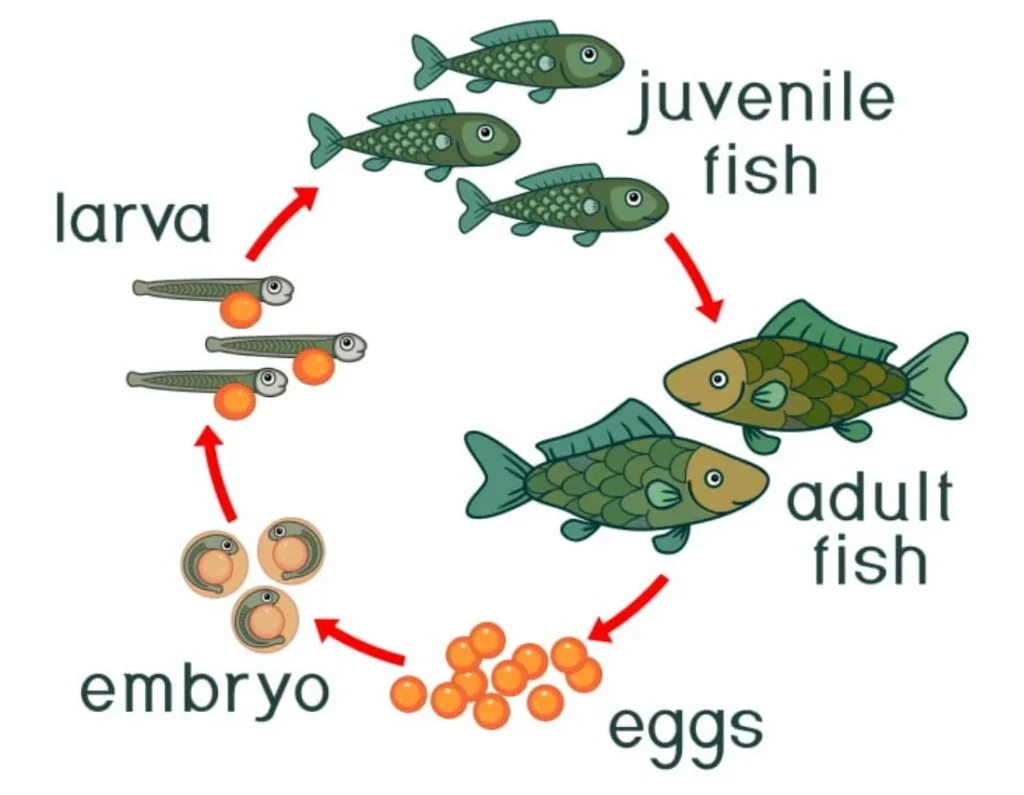
1. What are the stages of fishes life cycle?
Egg, larva, juvenile, adult, and reproduction.
2. Do all fish go through the same life cycle?
No, stages are similar, but duration and behavior vary.
3. What is the larval stage in fish?
It is the early stage after hatching when fish depend on the yolk.
4. How do fish reproduce?
Mostly through egg laying and external fertilization.
5. Where do fish lay eggs?
In water, on plants, rocks, or nests.
6. How long do fish live?
From a few weeks to several decades, depending on the species.
7. Why do fish produce many eggs?
To increase the chances of survival due to predators.
8. What affects the fish life cycle?
Temperature, food availability, and water quality.
Conclusion
The fish’s life cycle is a complex and fascinating process that highlights the adaptability and resilience of aquatic life. From eggs to fully grown adults, fish go through multiple stages that ensure the continuation of their species.
Understanding these stages helps us appreciate the importance of fish in ecosystems and their role in maintaining environmental balance. However, human activities such as pollution and overfishing threaten their survival.
By learning about fish life cycles and taking steps to protect their habitats, we can contribute to preserving biodiversity and ensuring sustainable aquatic ecosystems.
Fish are not just a source of food—they are essential to the health of our planet. Protecting them today ensures a better future for generations to come.
Also Read: salamander life cycle