
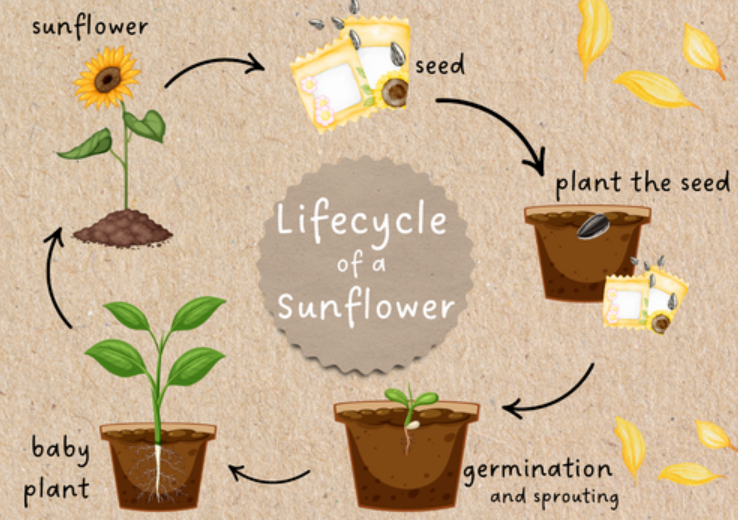
The sunflower life cycle is one of the most beautiful examples of how a small seed can grow into a tall, bright, and useful plant. A sunflower starts its journey as a seed, grows roots and leaves, forms a strong stem, produces a flower head, makes seeds, and finally completes its cycle when those seeds fall or are collected for planting, food, or oil.
The common sunflower is scientifically known as Helianthus annuus. It belongs to the Asteraceae family and is native mainly to the Americas. Sunflowers are widely grown for their seeds, oil, ornamental value, as bird food, and to support pollinators.
Q: How long does a sunflower’s life cycle take?
A: Most sunflowers complete their life cycle in about 70 to 120 days, depending on the variety, weather, soil, and purpose of growing.
Q: What are the main stages of the sunflower life cycle?
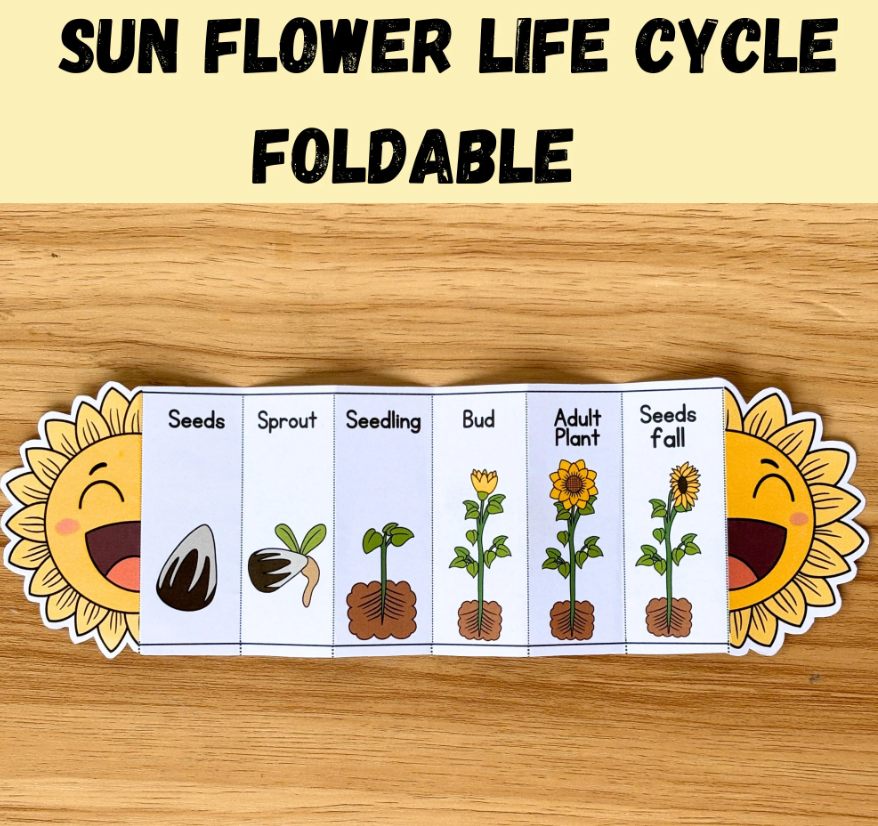
A: The main stages are seed, germination, seedling, vegetative growth, bud formation, flowering, pollination, seed development, and maturity.
Q: Why are sunflowers important?
A: Sunflowers support pollinators, produce edible seeds, provide sunflower oil, improve garden biodiversity, and offer food for birds and other animals.
Quick Life Cycle Table
| Stage | What Happens | Simple Time Range |
| Seed | The dry seed waits for warmth, water, and soil contact. | Before planting |
| Germination | Roots grow first, then a shoot comes out. | 7 to 10 days |
| Seedling | Small leaves appear, and the young plant starts making food. | 1 to 3 weeks |
| Vegetative Growth | Stems become taller, leaves become larger, and roots spread deeper. | 3 to 8 weeks |
| Bud Formation | A flower bud forms at the top of the plant. | 5 to 10 weeks |
| Flowering | Yellow petals open and pollinators visit the flower head. | Around 8 to 13 weeks |
| Pollination | Pollen moves from flower parts, often helped by bees. | During bloom |
| Seed Development | Seeds grow in the flower head. | After flowering |
| Maturity | The flower head dries and bends down, and the seeds become ready. | 70 to 120+ days |
The History of Their Scientific Naming
The scientific name of the common sunflower is Helianthus annuus. The name has a simple meaning. Helianthus comes from two Greek words: helios, meaning sun, and anthos, meaning flower. So, the name means sunflower. This name fits the plant because its large yellow flower head looks like the sun.
The second part, annuus, means annual. This means the plant usually completes its whole life cycle in one growing season. It starts from a seed, grows, flowers, produces seeds, and dies within the same year.
Sunflowers belong to the Asteraceae family, also called the daisy family. One interesting fact is that what appears to be a single big flower is actually a flower head composed of many tiny flowers. The outer yellow parts are called ray florets, and the center contains many disc florets. These disc florets later form sunflower seeds.
Their Evolution And Their Origin
Sunflowers have a long natural history. The common sunflower, Helianthus annuus, originated in North America and later spread to many parts of the world. Today, sunflowers are grown in gardens, farms, and fields because they are beautiful, useful, and adaptable.
Over time, wild sunflowers evolved to survive in open sunny areas. Their strong stems, deep roots, broad leaves, and large flower heads helped them compete for sunlight and attract pollinators. Their seeds also became an important food source for birds, insects, mammals, and humans.
Human cultivation changed sunflowers even more. People selected plants with bigger flower heads, better seeds, higher oil content, and stronger growth. This helped create modern sunflower varieties used for sunflower oil, snacks, animal feed, and ornamental planting.
Sunflowers also developed a special growth habit called heliotropism in young plants. Young sunflower buds can follow the sun from east to west during the day. As the plant matures, the flower head usually faces east. This helps warm the flower early in the morning and may attract more pollinators.
Because of their natural strength and human selection, sunflowers are now grown in many climates. They are popular because they can grow quickly, produce valuable seeds, and support pollinator-friendly ecosystems.
Their main food and its collection process
Sunflowers do not eat food like animals. A sunflower makes its own food through photosynthesis. This means the plant uses sunlight, carbon dioxide, and water to produce sugar for growth.
The main “food-making” parts of a sunflower are its green leaves. The leaves contain chlorophyll, which captures sunlight. The roots collect water and minerals from the soil, while the leaves take in carbon dioxide from the air.
Important parts of the sunflower food process:
- Roots collect water and minerals from the soil.
- Leaves capture sunlight using chlorophyll.
- Stomata, tiny openings in leaves, take in carbon dioxide.
- The plant creates glucose, a simple sugar used for energy.
- Extra energy is stored and used to build stems, leaves, flowers, and seeds.
Sunflowers need good sunlight because they are sun-loving plants. They usually grow best in places with full sun, meaning at least 6 hours of direct sunlight per day.
Water is also important, especially during germination, early growth, flowering, and seed formation. However, sunflowers do not like waterlogged soil. Their roots need oxygen, so loose and well-drained soil is best.
Nutrients like nitrogen, phosphorus, and potassium help the plant grow properly. Nitrogen supports leaves, phosphorus helps roots and flowers, and potassium supports overall plant health.
Important Things That You Need To Know
The sunflower life cycle is closely linked to many useful products and common questions. People search for sunflower seeds, sunflower oil, sunflower lecithin, sunflower drawings, and even ask, ” Is sunflower oil bad for you?” These topics are related because the sunflower is not only a garden flower. It is also a food crop, oil crop, and creative symbol.
Sunflower seeds are the mature seeds produced in the center of the flower head. They are eaten as snacks, used in bakery items, added to salads, and given to birds. These seeds are also pressed to make sunflower oil.
Sunflower oil is widely used for cooking. Like other oils, it should be used in moderation. It is not automatically “bad,” but using too much oil or repeatedly heating oil at very high temperatures is not healthy. A balanced diet matters more than blaming a single oil.
Sunflower lecithin is a natural substance usually taken from sunflower seeds. It is often used in food production as an emulsifier, meaning it helps mix ingredients that normally separate, such as oil and water.
A sunflower drawing is popular in art because the flower has a simple but attractive shape: a round center, bright petals, and a tall stem. This makes it easy for children, designers, and artists to use it as a symbol of happiness, summer, farming, and nature.
Their life cycle and ability to survive in nature
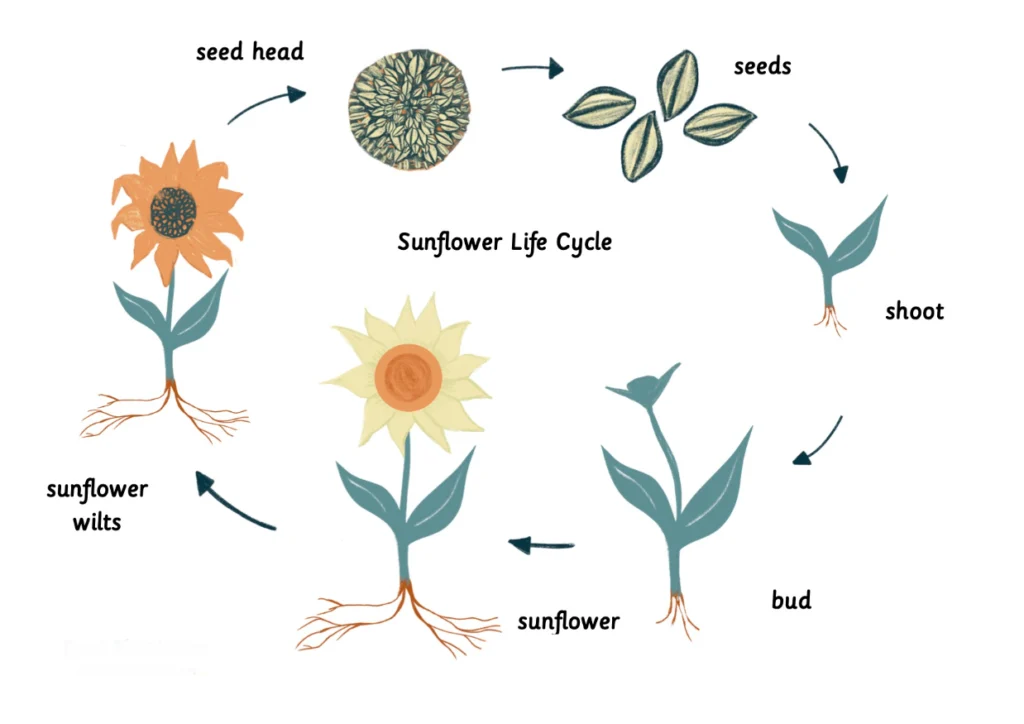
Seed Stage
The life cycle begins with a sunflower seed. The seed contains a tiny plant embryo and stored food. When the seed gets enough warmth, moisture, and air, it becomes active.
Germination Stage
During germination, the seed coat breaks open. The root comes out first and grows downward. Then the shoot grows upward toward the light. This stage is very important because weak germination can reduce the whole plant’s growth.
Seedling Stage
The seedling develops its first leaves. These leaves start photosynthesis and help the plant make its own food. At this stage, the plant is small and needs protection from drought, pests, and weeds.
Vegetative Growth Stage
The plant grows taller and forms more leaves. The roots spread deeper into the soil. Strong roots help sunflowers survive dry periods better than many small plants.
Flowering and Seed Stage
The plant forms a bud, then opens into a flower head. Pollinators visit the flower and help with seed formation. After flowering, seeds mature in the center. The flower head dries and bends down, protecting seeds from rain and some birds.
Sunflowers survive in nature because they grow fast, love sunlight, produce many seeds, and attract helpful pollinators.
Their Reproductive Process and raising their children
Sunflowers reproduce through flowers and seeds. Their flower head is not a single flower. It is made of many tiny flowers called florets. The center part contains disc florets, which are the main reproductive parts.
The reproductive process happens like this:
- The sunflower develops a flower bud.
- The bud opens into a large flower head.
- The center florets produce pollen and receive pollen.
- Bees and other insects move pollen while collecting nectar and pollen.
- Pollination allows seeds to form.
- Each fertilized floret can become one seed.
- The seeds mature and dry inside the flower head.
- Seeds fall naturally or are eaten and spread by birds and animals.
Sunflowers do not raise children like animals. Instead, they “raise” the next generation by producing many strong seeds. Each seed has the chance to become a new sunflower plant.
The parent plant also helps by storing food in the seed. This stored food provides the baby plant with enough energy to initiate germination before it can make its own food through photosynthesis.
Pollinators are very important in this process. Bees, butterflies, and other insects help improve seed production by carrying pollen from one floret or plant to another. Pollinators are also essential for many food crops and natural ecosystems.
The importance of them in this Ecosystem
Support for Pollinators
Sunflowers provide pollen and nectar for bees, butterflies, and other insects. This makes them useful for pollinator-friendly gardens and farms. Pollinators also help many crops produce fruits and seeds.
Food for Birds and Wildlife
Mature sunflower seeds are food for birds, squirrels, and other animals. In nature, this helps transfer energy from plants to wildlife.
Soil and Garden Benefits
Sunflowers have strong roots that help hold soil. Their tall stems and broad leaves also create small habitats for insects. After the plant dies, its organic matter can return nutrients to the soil.
Human Food and Farming Value
Sunflowers are important for sunflower oil, edible seeds, livestock feed, and ornamental gardening. They are grown worldwide because they are useful and relatively easy to cultivate.
Biodiversity Value
A sunflower field or garden can attract many living things. Bees, butterflies, beetles, birds, and small animals may all use sunflowers in different ways. This makes sunflowers more than just pretty flowers. They are part of a larger living system.
What to do to protect them in nature and save the system for the future
- Grow sunflowers in home gardens, school gardens, and community spaces.
- Avoid using harmful chemical pesticides, especially during flowering time.
- Plant a variety of flowering plants near sunflowers to support bees and butterflies throughout the season.
- Keep soil healthy by adding compost and avoiding overuse of chemical fertilizers.
- Save healthy sunflower seeds from mature plants for future planting.
- Leave some seed heads for birds rather than harvesting them all.
- Water young plants properly, especially during dry weather.
- Protect seedlings from weeds, slugs, and birds until they are strong enough to withstand them.
- Choose local or climate-suitable sunflower varieties when possible.
- Support farms and gardens that use pollinator-friendly methods.
- Teach children about the sunflower life cycle through planting, observing, and drawing.
- Reduce habitat loss by keeping natural areas, wildflower strips, and field edges healthy.
Protecting sunflowers also helps protect pollinators, birds, soil life, and food systems.
Frequently Asked Questions (FAQs)
Q1: What is the sunflower life cycle?
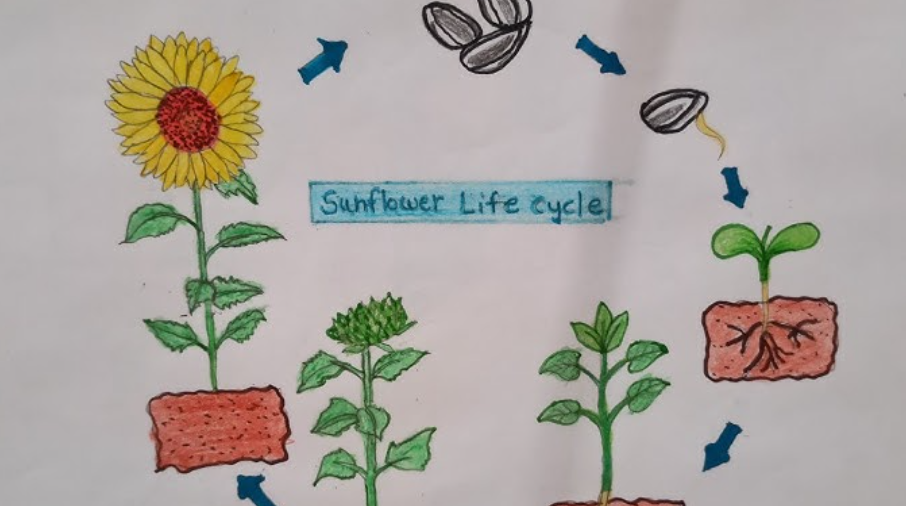
A: The sunflower life cycle is the full growth journey from seed to mature plant, flower, seed production, and natural death.
Q2: How long does a sunflower take to grow?
A: Most sunflowers take around 70 to 120 days from planting to maturity, depending on the variety and growing conditions.
Q3: What are the main stages of a sunflower?
A: The main stages are seed, germination, seedling, vegetative growth, bud formation, flowering, pollination, seed development, and maturity.
Q4: Do sunflowers need full sun?
A: Yes. Sunflowers grow best in full sunlight. They usually need at least 6 hours of direct sun each day.
Q5: Why do sunflowers face the sun?
A: Young sunflowers can show heliotropism, meaning they follow the sun during the day. Mature flower heads usually face east.
Q6: Are sunflower seeds good for planting?
A: Yes. Mature, healthy sunflower seeds can grow into new plants when planted in warm, moist, well-drained soil.
Q7: Is sunflower oil bad for you?
A: Sunflower oil is not automatically bad. It should be used in moderation as part of a balanced diet. Avoid overusing any cooking oil.
Q8: What is sunflower lecithin?
A: Sunflower lecithin is a natural compound from sunflower seeds. It is often used in foods to help mix ingredients smoothly.
Conclusion
The sunflower life cycle shows how powerful and useful one small seed can be. From germination to flowering and seed production, every stage has a clear purpose. Sunflowers make their own food through photosynthesis, attract pollinators, produce seeds, and support wildlife.
They are also valuable to humans because they provide sunflower seeds, sunflower oil, garden beauty, and natural learning opportunities. Their bright flowers are easy to recognize, but their role in nature is much deeper than their appearance suggests.
Protecting sunflowers means protecting pollinators, birds, soil health, and future food systems. By planting sunflowers, avoiding harmful pesticides, saving seeds, and supporting biodiversity, we can help keep this beautiful plant and its Ecosystem strong for the future.
Also Read: beetle life cycle