
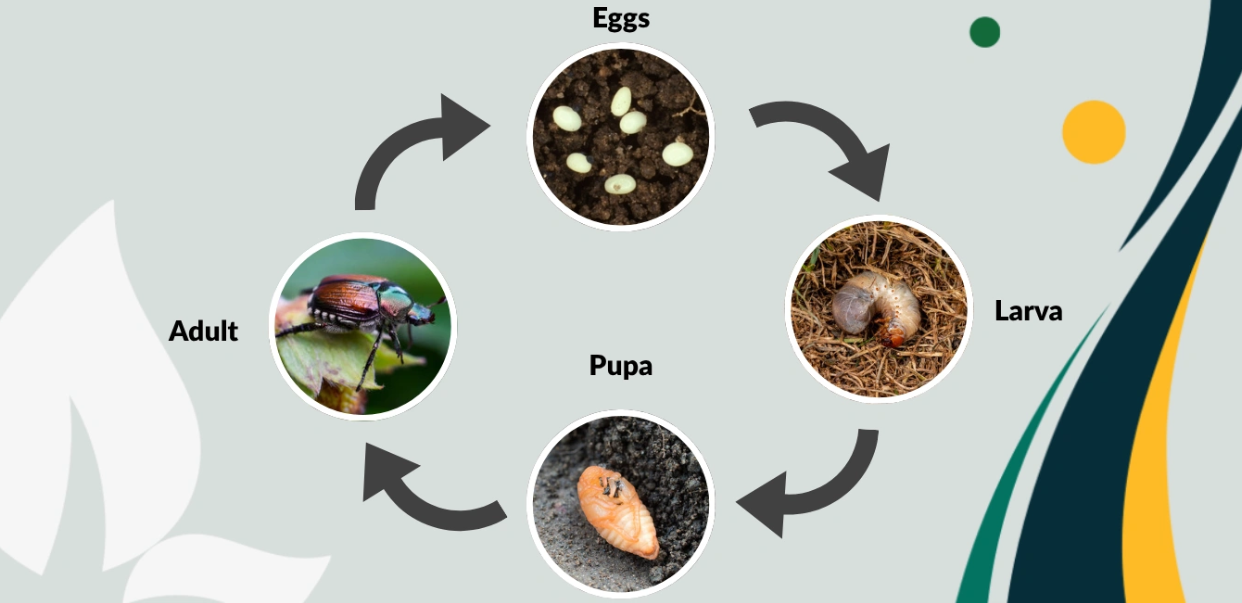
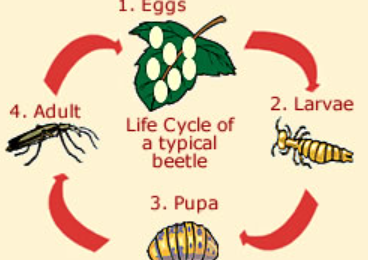
The beetle life cycle is one of the most interesting growth stories in the insect world. Beetles do not grow like humans, birds, or mammals. They undergo complete metamorphosis, meaning their bodies pass through four distinct stages: egg, larva, pupa, and adult beetle. This same basic pattern is found in many beetle groups, from the Japanese beetle and Asian lady beetle to the stag beetle and Hercules beetle, and even in household pests like carpet beetle larvae.
Beetles belong to the insect order Coleoptera, the largest known insect order, with more than 400,000 described species worldwide. Their success comes from strong wing covers, chewing mouthparts, flexible feeding habits, and the ability to live in forests, gardens, soil, freshwater edges, stored food areas, and even inside dead wood.
For SEO and learning purposes, this article explains the beetle life cycle in simple language, covering their food, scientific names, evolution, reproduction, survival, ecosystem value, and protection.
Q: What are the four stages of the beetle life cycle?
A: The four stages are egg, larva, pupa, and adult beetle.
Q: How long does a beetle’s life cycle take?
A: It depends on the species. Some beetles complete their life cycle in weeks, while others, such as large wood-feeding beetles, may take months or years.
Q: Are beetle larvae harmful or helpful?
A: Both can be true. Some larvae damage roots, wood, stored food, or fabrics, while others help break down dead matter and support soil health.
Quick Life Cycle Table
| Stage | What Happens | Common Place | Simple Note |
| Egg | Females lay small eggs | Soil, leaves, wood, bark, stored material | Eggs hatch when conditions are right |
| Larva | Young beetle feeds and grows | Soil, plants, wood, fabric, compost | This is often the longest feeding stage |
| Pupa | The body changes into a resting form | Soil, wood, leaf litter, hidden spaces | Larva becomes the adult form |
| Adult | Beetle mates, feeds, flies, and lays eggs | Gardens, forests, homes, fields | Adults continue the next generation |
The table gives a simple view, but each beetle species has its own timing. For example, Japanese beetle eggs may hatch in about two weeks, and the grubs feed mainly on grass roots before becoming adults.
The History of Their Scientific Naming
The scientific order name of beetles is Coleoptera. This name has a strong link to the beetle’s body design.
- Coleoptera comes from Greek-based words meaning “sheath wings.”
- The first pair of beetle wings is hardened into covers called elytra.
- These elytra protect the softer flying wings underneath.
- This special wing structure is one of the main reasons beetles are easy to separate from many other insects.
- The word beetle is a common English name, while Coleoptera is used in science.
- A single beetle species also has a two-part scientific name, such as Popillia japonica for the Japanese beetle.
- The order includes many well-known groups, including lady beetles, stag beetles, weevils, ground beetles, scarab beetles, and carpet beetles.
The name is not just a label. It describes a key feature that helped beetles survive in many habitats. Their hardened wing covers protect the body from dryness, injury, soil particles, predators, and rough surfaces. This is one reason beetles became so widespread across the planet.
Their Evolution And Their Origin
The origin of beetles dates back to Earth’s deep history. Fossil evidence shows that beetles have ancient roots, and many researchers connect early beetle evolution with the Permian Period, long before humans, mammals, or flowering plants became dominant. Some early beetles were likely linked with wood, bark, and decaying plant material. Their hard outer bodies also gave them a better chance of being preserved as fossils compared with many soft-bodied insects.
One big reason beetles became so successful is their body plan. The elytra protect their wings and abdomen. Their chewing mouthparts allow them to eat a wide range of foods. Their larvae and adults often live in different places and eat different foods, which lowers competition between young and mature beetles.
Another important factor is complete metamorphosis. A beetle larva can focus mainly on feeding and growth, while the adult focuses more on movement, mating, and spreading to new places. This split-life strategy helped beetles spread into forests, grasslands, deserts, wetlands, farms, homes, and food storage systems.
The rise of flowering plants also gave many beetles more food sources, including pollen, nectar, fruits, leaves, wood, roots, and seeds. Some beetles became predators, some became plant feeders, and others became decomposers. This wide range of lifestyles made Coleoptera one of the most successful animal groups on Earth.
Important Things That You Need To Know
When people search for the beetle life cycle, they often encounter many related terms. Some are true beetles, some are common names, and one is not an insect at all.
The word beetle can mean thousands of insects in the order Coleoptera. A blue beetle usually refers to a beetle with a shiny blue or metallic body, but it is not always a single species. Color alone is not enough for correct identification.
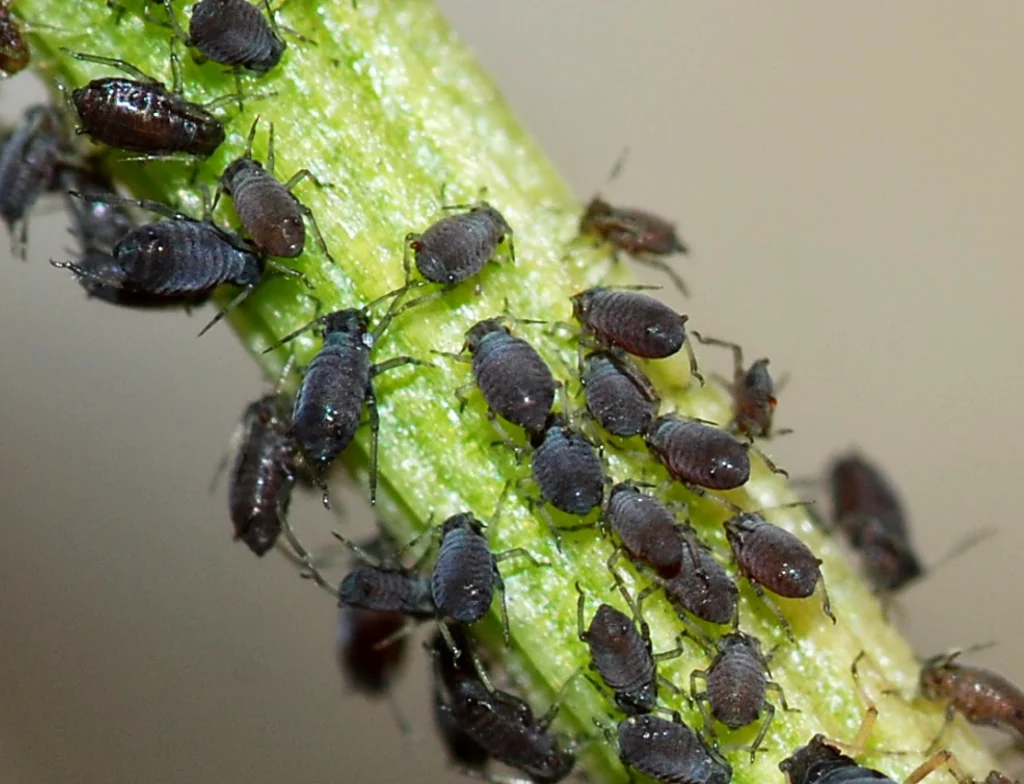
The Japanese beetle is a plant-feeding beetle known for damaging leaves, flowers, and lawns. Its larvae, called grubs, live in soil. The Asian lady beetle is a type of lady beetle that eats aphids but may also gather indoors during cooler months. Stag beetle males are famous for their large jaw-like mandibles, while the Hercules beetle is known for its huge horns and powerful body.
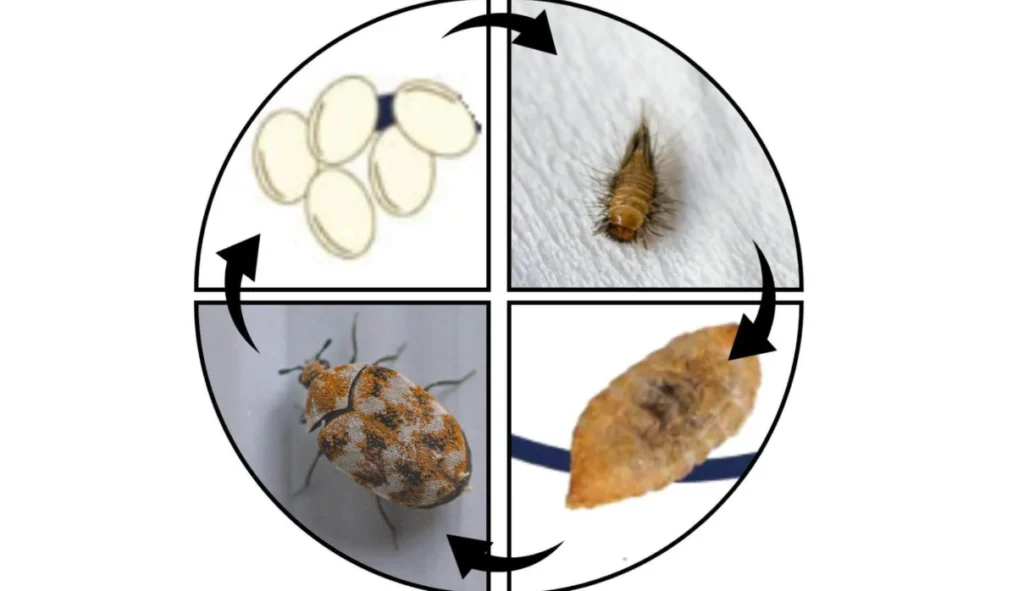
Carpet beetle larvae are different from most garden beetles because they feed on dry animal-based materials such as wool, fur, feathers, hair, dead insects, and similar natural items. Adult carpet beetles often feed on pollen outdoors, but the larvae can damage fabrics indoors.
One LSI keyword needs special care: Volkswagen Beetle. It is a famous car model, not part of the insect life cycle. So, when writing about beetles in biology, it is better to separate the car meaning from real living beetles.
Their main food and its collection process
Beetles eat many different foods because the group is extremely diverse. Their feeding habits depend on the species, age, habitat, and season.
- Plant-feeding beetles eat leaves, flowers, fruits, seeds, stems, roots, and pollen. The Japanese beetle, for example, is known for feeding on many garden and crop plants.
- Predatory beetles hunt soft insects, eggs, mites, aphids, caterpillars, slugs, and other small animals.
- Lady beetles are famous for eating aphids. Both adults and larvae can help reduce pest populations in gardens and farms.
- Wood-feeding beetle larvae live inside dead wood, rotting logs, or tree tissue. Some help recycle forest material, while others can harm living trees.
- Dung beetles collect animal dung, roll or bury it, and use it as food for themselves or their larvae.
- Carpet beetle larvae collect nutrients from dry animal-based materials such as wool, fur, feathers, and dead insects.
- Scavenger beetles feed on dead animals, decaying plants, fungi, or organic waste.
Their food collection process is mostly guided by smell, touch, and taste. Adults often search for the right food or the right place to lay eggs. Larvae usually stay close to the food source where they hatch. This is why female beetles carefully choose where to lay eggs. A good egg-laying site gives the young larvae a better chance to eat, grow, and survive.
Their life cycle and ability to survive in nature
Egg Stage
The egg stage starts when a female beetle lays eggs in a safe place. Depending on the species, eggs may be placed in soil, under bark, inside wood, on leaves, near roots, in dung, or close to stored food.
Some beetles lay only a small number of eggs. Others lay many. The main goal is simple: place the eggs where the larvae will find food after hatching.
Larva Stage
The larva is the main growing stage. Beetle larvae may look like white grubs, small worms, hairy larvae, or flattened hunters. They eat a lot because they need energy for the next stage.
In many beetles, the larval stage lasts longer than the adult stage. This is where the beetle builds body size and stores energy.
Pupa Stage
The pupa is a quiet but powerful stage. The larva stops feeding and undergoes internal changes. Wings, legs, antennae, and adult organs form during this period.
This stage is often hidden in soil, wood, leaf litter, or protected cracks.
Adult Stage
The adult beetle comes out with its final body shape. Adults may fly, crawl, feed, defend themselves, find mates, and lay eggs.
Beetles survive in nature because they have hard bodies, protective wing covers, strong jaws, camouflage, warning colors, chemical defenses, and the ability to use many food sources. Their life cycle enables them to adapt to changing seasons and different habitats.
Their Reproductive Process and raising their children
Beetle reproduction is simple in structure but highly effective.
- Mate finding: Adult beetles find partners through scent, movement, color, sound, or contact signals.
- Courtship: Some beetles fight, display, or guard mates. Male stag beetles may use their large jaws to compete with other males.
- Mating: After mating, the female stores sperm and later uses it to fertilize her eggs.
- Egg laying: The female lays eggs near a useful food source. This may be soil, leaves, bark, dead wood, dung, roots, stored grain, or fabric material.
- Smart placement: Female beetles do not usually “raise” babies like birds or mammals. Their primary parental care is choosing the right place to lay eggs.
- Special care in some beetles: Some beetles show stronger care. Certain burying beetles prepare small animal carcasses as food for larvae and may stay near the young.
- Larval independence: Most beetle larvae hatch and begin feeding on their own.
- Protection through hiding: Many larvae survive by staying underground, inside wood, under bark, or in hidden natural materials.
In many species, the female’s choice decides the future of the young. If eggs are laid near enough food and moisture, the larvae have a much better chance of completing the full beetle life cycle.
The importance of them in this Ecosystem
Beetles Help Break Down Dead Matter
Many beetles are natural recyclers. They feed on dead plants, fallen wood, dung, fungi, dead animals, and other organic matter.
By breaking down these materials, beetles help return nutrients to the soil. This supports plant growth and keeps ecosystems cleaner.
Beetles Support Soil Health
Dung beetles and soil-living beetles move organic material underground. Their movement helps mix soil, improve airflow, and support small soil organisms.
This hidden work is important for farms, forests, grasslands, and gardens.
Beetles Control Pests
Some beetles are strong natural predators. Lady beetles, ground beetles, and other predatory beetles eat aphids, mites, insect eggs, caterpillars, and other pests.
This reduces the need for harsh chemical control in many natural and garden systems.
Beetles Help Pollination
Some adult beetles visit flowers to feed on pollen or nectar. While moving from flower to flower, they may carry pollen.
Beetle pollination is especially important in some older plant groups and certain tropical plants.
Beetles Feed Other Animals
Birds, frogs, reptiles, fish, mammals, spiders, and other insects eat beetles. This makes beetles an important part of the food chain.
Without beetles, many animals would lose a major food source.
What to do to protect them in nature and save the system for the future
- Avoid unnecessary pesticide use. Broad-spectrum insecticides can kill helpful beetles along with harmful pests.
- Keep leaf litter in some garden areas. Many beetles hide, hunt, or overwinter under fallen leaves.
- Protect dead wood in safe places. Dead logs support wood-feeding larvae, fungi, and forest recycling.
- Plant native flowers. Flowering plants provide pollen, nectar, shelter, and prey insects for beneficial beetles.
- Do not destroy every grub you see. Some grubs are pests, but others are harmless or helpful decomposers.
- Create mixed habitats. Gardens with trees, shrubs, flowers, soil cover, and mulch support more beetle diversity.
- Use pest control only after identification. A lady beetle larva may look strange, but it is a helpful predator of aphids.
- Store wool and natural fabrics properly. This helps manage carpet beetle larvae indoors without harming outdoor beetles.
- Reduce night light pollution. Many beetles are attracted to artificial lights and may become exhausted or exposed to predators.
- Teach children about beetles. People protect what they understand. Simple nature learning can help future conservation.
Protecting beetles does not mean allowing pests to damage crops or homes. It means learning the difference between harmful outbreaks and healthy beetle life in nature.
Frequently Asked Questions (FAQs)
Q: What is the beetle life cycle?
A: The beetle life cycle is the full growth process from egg to larva, then pupa, and finally adult beetle.
Q: Do all beetles have the same life cycle?
A: Yes, all beetles pass through complete metamorphosis, but the time, food, habitat, and behavior differ by species.
Q: What does a beetle larva look like?
A: It depends on the species. Some look like white grubs, others like worms, and others are hairy, flat, or armored.
Q: Are carpet beetle larvae dangerous?
A: Carpet beetle larvae are not dangerous like biting insects, but they can damage wool, fur, feathers, and other animal-based materials indoors.
Q: Is a Japanese beetle harmful?
A: The Japanese beetle can be harmful to lawns, gardens, and crops. Its grubs feed on roots, while adults feed on leaves and flowers.
Q: Are lady beetles good for gardens?
A: Yes. Many lady beetles eat aphids, mites, scales, and other soft-bodied pests, making them helpful natural pest controllers.
Q: What is the difference between a beetle and a bug?
A: In everyday speech, people call many insects bugs. Scientifically, beetles belong to Coleoptera and usually have hard front wing covers called elytra.
Q: Is the Volkswagen Beetle related to real beetles?
A: No. The Volkswagen Beetle is a car. It is called “beetle” because of its rounded shape, but it is not part of the insect life cycle.
Conclusion
The beetle life cycle shows how small changes in nature can lead to great survival power. From a tiny egg, a beetle becomes a feeding larva, then a hidden pupa, and finally an adult ready to mate and begin the cycle again. This four-stage process helps beetles live in soil, forests, gardens, homes, farms, and many other places.
Beetles are not all pests. Some damage crops, roots, wood, or fabrics, but many others protect plants, recycle waste, improve soil, pollinate flowers, and feed wildlife. That is why understanding beetles, Japanese beetles, Asian lady beetles, stag beetles, Hercules beetles, and carpet beetle larvae matters.
If we protect healthy habitats, reduce careless pesticide use, and learn proper identification, beetles can continue doing their quiet but powerful work in nature. Their life cycle is small in size, but huge in ecological value.
Also Read: termite life cycle