
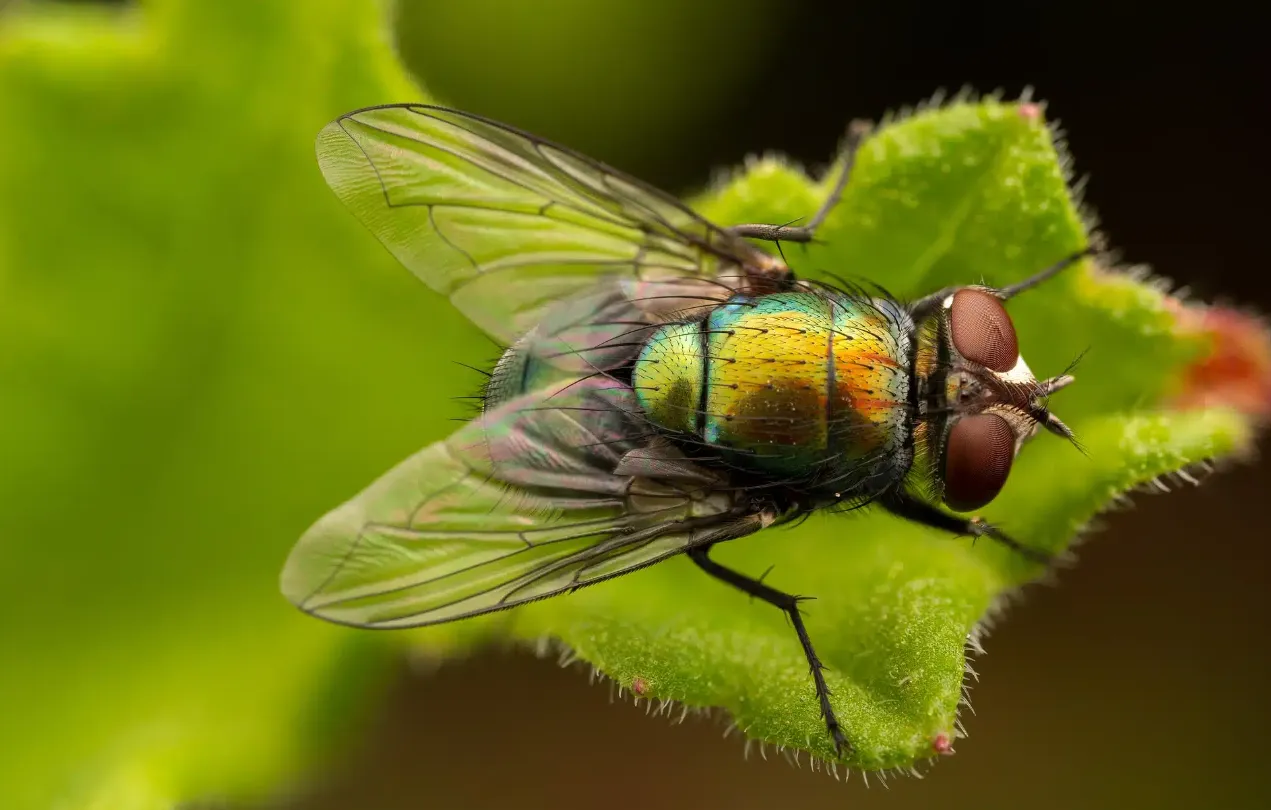
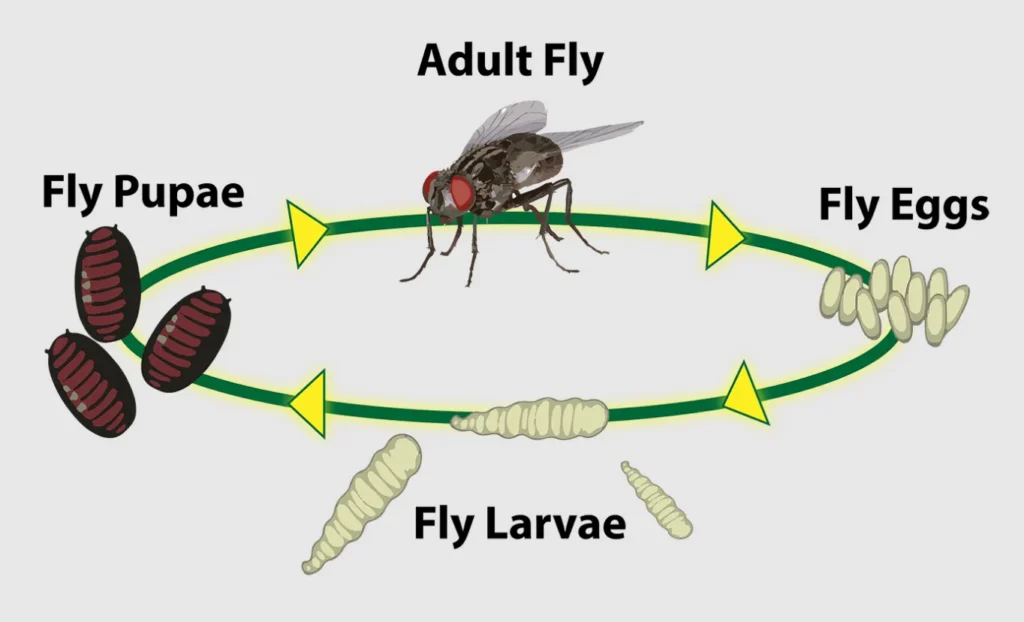
The life cycle of a fly is one of the most fascinating and efficient biological processes in the insect world. Flies, especially the common housefly (Musca domestica), undergo a rapid transformation through four distinct stages: egg, larva, pupa, and adult. Understanding this cycle is important not only for scientific knowledge but also for pest management and for appreciating their ecological roles.
Flies are found almost everywhere on Earth and play a crucial role in decomposition and nutrient recycling. Despite being considered pests, they are essential for maintaining environmental balance. Their life cycle can be completed in as little as 7 to 10 days under ideal conditions, making them one of the fastest-reproducing insects.
Quick Answers (Most Common Questions)
- What is the life cycle of a fly?
- It is a four-stage process: egg → larva (maggot) → pupa → adult fly.
- How long is the life cycle of a fly?
- Typically, 7–10 days in warm conditions, but it can extend to several weeks in cooler environments.
- Why is the fly’s life cycle important?
- It helps in decomposition, nutrient recycling, and maintaining ecological balance.
Quick Life Cycle Table
| Stage | Duration | Description |
| Egg | 8–24 hours | Tiny white eggs are laid in organic matter |
| Larva | 3–5 days | Maggots feed and grow rapidly |
| Pupa | 3–6 days | Transformation into an adult occurs |
| Adult Fly | 2–4 weeks | Reproduction and spreading species |
The History Of Their Scientific Naming
The scientific classification of flies has evolved over centuries through careful observation and taxonomy. Here are key highlights:
- Flies belong to the order Diptera, meaning “two wings,” a term introduced by early entomologists.
- The common housefly was scientifically named Musca domestica by Carl Linnaeus in 1758.
- Early classification relied on physical traits such as wing structure and mouthparts.
- Advances in genetics have refined fly classification, grouping them into suborders like Nematocera and Brachycera.
- Scientists use binomial nomenclature to standardize naming worldwide.
- The study of flies is called dipterology, a specialized branch of entomology.
This scientific naming system helps researchers identify species, understand behavior, and better study their ecological impact.
Their Evolution And Their Origin
Flies have a long evolutionary history that dates back over 250 million years. Fossil records show that early Diptera existed during the Triassic period, evolving alongside dinosaurs.
Initially, primitive flies had more than two wings. Over time, they developed into modern flies with a single pair of wings and specialized balancing organs called halteres. This adaptation improved flight stability and agility.
Flies diversified rapidly due to their ability to adapt to various environments. From tropical forests to urban cities, they evolved to survive in almost every ecosystem. Their feeding habits also diversified, allowing them to consume decaying matter, nectar, blood, and even plant sap.
Natural selection played a key role in shaping their short life cycle. Faster reproduction increased survival chances in changing environments. This is why flies can multiply quickly and adapt to human habitats today.
Modern flies are incredibly efficient organisms. Their evolution has made them not only resilient but also vital contributors to ecosystems, especially in waste decomposition and nutrient recycling.
Important Things That You Need To Know
Understanding key aspects of fly biology helps answer questions like how long a fly’s life cycle is and what it entails in more depth.
The life cycle duration of a fly depends heavily on temperature and food availability. In warm climates, the process speeds up significantly, while cooler temperatures slow it down.
The complete metamorphosis of a fly ensures that each stage has a different function. This reduces competition between larvae and adult flies.
Another important factor is the growth stages of a fly, which are highly efficient for survival. Larvae focus only on feeding, while adults focus on reproduction.
The average lifespan of a housefly is relatively short, but its rapid reproduction compensates for this.
Additionally, the environmental conditions affecting the fly life cycle include humidity, temperature, and the availability of organic waste.
Understanding these factors helps in pest control, scientific research, and environmental conservation.
Their Main Food and Its Collection Process
Flies have diverse feeding habits depending on their species. The most common flies are attracted to decaying organic matter.
Main Food Sources
- Rotting fruits and vegetables
- Animal waste and manure
- Dead animals
- Sugary substances
- Food leftovers
Collection Process
- Flies use their sponging mouthparts to absorb liquid food.
- They release saliva or digestive enzymes to liquefy solid food.
- Their sensitive feet help detect food instantly.
- Flies can taste food through receptors on their legs.
- They regurgitate partially digested food to make it easier to consume.
This feeding behavior makes flies efficient decomposers but also potential disease carriers.
Their Life Cycle and Ability to Survive in Nature
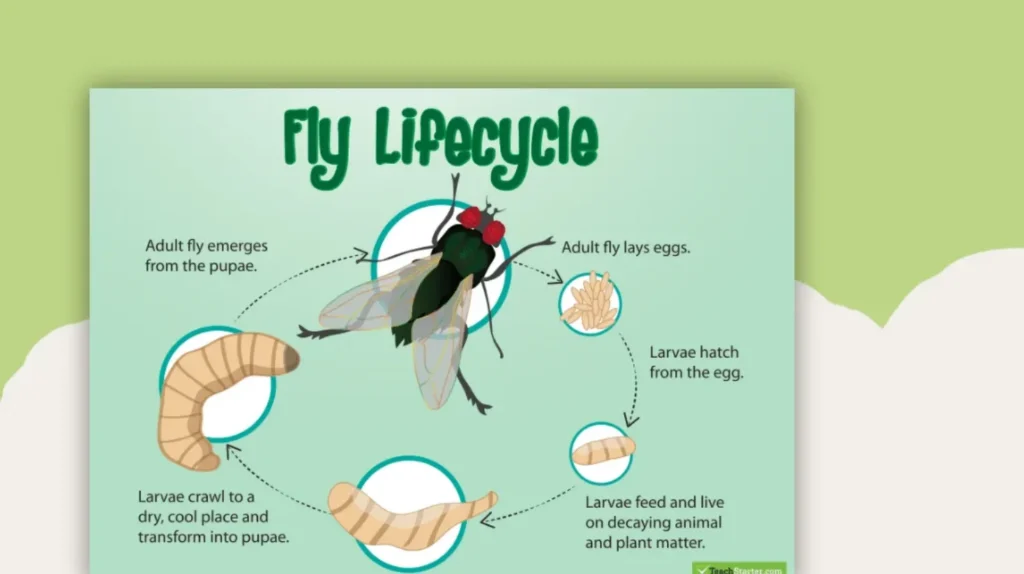
Egg Stage
Female flies lay hundreds of eggs in moist, organic material. This ensures immediate food for larvae.
Larva (Maggot Stage)
Larvae hatch quickly and begin feeding nonstop. Their main goal is rapid growth.
Pupa Stage
The larva forms a protective casing and transforms. This stage is critical for development.
Adult Stage
Adult flies emerge fully formed. They focus on reproduction and spreading the species.
Flies survive in nature due to:
- Rapid reproduction
- High adaptability
- Ability to thrive in diverse environments
- Efficient feeding mechanisms
These traits make flies one of the most successful insect species.
Their Reproductive Process and Raising Their Children
Flies reproduce quickly and efficiently, ensuring the survival of their species.
Reproductive Process
- Mating occurs shortly after reaching adulthood.
- Female flies lay up to 500 eggs in batches.
- Eggs are placed in nutrient-rich environments.
- Fertilization happens internally.
Raising Their Young
- Flies do not provide parental care.
- Eggs are laid where food is abundant.
- Larvae are independent from birth.
- Rapid growth reduces vulnerability to predators.
This strategy allows flies to maintain large populations despite short lifespans.
Importance of Them in this Ecosystem
Decomposition and Recycling
Flies break down organic waste, returning nutrients to the soil.
Food Source
They serve as food for birds, reptiles, and other insects.
Pollination
Some flies help in pollinating plants, especially in harsh environments.
Scientific Research
Flies like fruit flies (Drosophila) are widely used in genetics research.
Waste Management
They help reduce waste by consuming decaying matter.
Despite their negative reputation, flies are essential for ecological balance.
What to Do to Protect Them in Nature and Save the System for the Future
- Preserve natural habitats where flies thrive
- Reduce excessive pesticide use
- Promote organic waste recycling
- Maintain ecological balance in urban areas
- Encourage biodiversity-friendly practices
- Avoid unnecessary extermination of beneficial fly species
- Support research on insect conservation
- Educate people about their ecological importance
Protecting flies ensures the continuation of vital ecosystem processes.
Frequently Asked Questions (FAQs)
- How long does it take for a fly to grow?
- Around 7–10 days under ideal conditions.
- What are the stages of a fly’s life cycle?
- Egg, larva, pupa, and adult.
- Where do flies lay eggs?
- In moist, decaying organic matter.
- Why do flies reproduce so fast?
- To increase survival chances in changing environments.
- Do flies have parents that care for them?
- No, they are independent from birth.
- What do fly larvae eat?
- Organic waste and decaying material.
- Are flies harmful or beneficial?
- Both—they can spread disease, but also help in decomposition.
- Can the life cycle of a fly be controlled?
- Yes, by managing waste and maintaining cleanliness.
Conclusion
The life cycle of a fly is a remarkable example of nature’s efficiency and adaptability. From tiny eggs to fully developed adults, flies complete their transformation in a matter of days. This rapid cycle allows them to thrive in diverse environments and maintain their populations.
While often seen as pests, flies play a crucial role in ecosystems. They contribute to decomposition, nutrient recycling, and even scientific advancements. Understanding their life cycle helps us manage their populations responsibly while appreciating their ecological importance.
By maintaining environmental balance and adopting sustainable practices, we can ensure that flies continue to perform their essential roles in nature. Their presence, though sometimes inconvenient, is a sign of a functioning and dynamic ecosystem.
Also Read About: tomato hornworm life cycle