
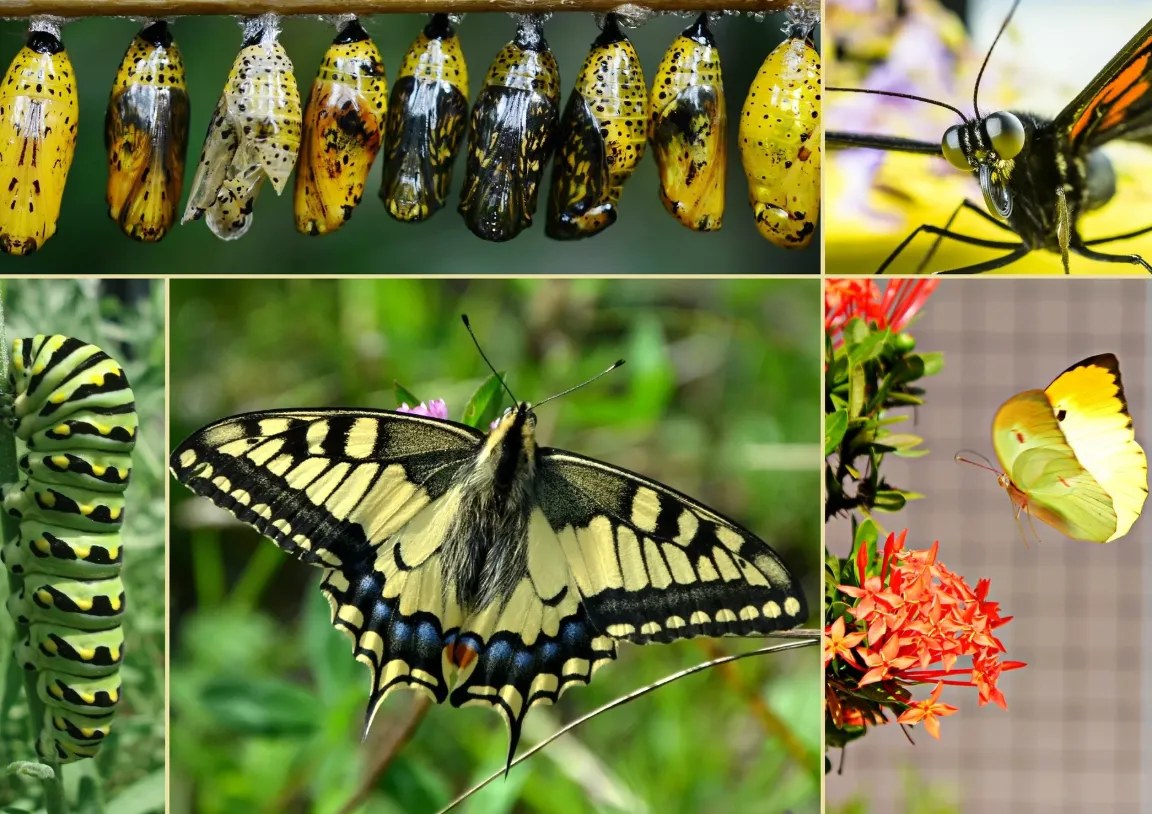
The butterfly life cycle is one of the most fascinating transformations in the natural world. From a tiny egg to a colorful flying insect, butterflies undergo a remarkable process known as complete metamorphosis. This process includes four main stages: egg, larva (caterpillar), pupa (chrysalis), and adult butterfly. Each stage has a unique role in helping the butterfly grow, develop, and survive in the wild.
Butterflies are not just beautiful insects fluttering in gardens and forests. They play an essential role in ecosystems as pollinators and indicators of environmental health. Scientists estimate that there are more than 20,000 butterfly species worldwide, each with slightly different life cycles, behaviors, and adaptations. Despite these differences, all butterflies follow the same fundamental stages of transformation.
The life cycle of butterflies has fascinated scientists, educators, and nature enthusiasts for centuries. It is commonly taught in schools because it clearly demonstrates how organisms grow and change over time. The process is also widely studied in biology to understand insect development, genetics, and ecological relationships.
Many people search for the butterfly life cycle for kids because it is easy to observe and understand. Watching a caterpillar transform into a butterfly provides a powerful example of how nature works. This transformation teaches patience, adaptation, and the complexity of living systems.
Today, butterflies face many challenges due to habitat loss, climate change, and pesticide use. However, conservation programs around the world are working to protect them and their habitats. Understanding the butterfly life cycle helps scientists and conservationists create strategies to protect these delicate creatures.
In this article, we will explore the origin, evolution, scientific history, and survival strategies of butterflies. We will also examine their reproductive processes, ecological importance, and the incredible stages that make up their life cycle.
Their Evolution And Their Origin
Butterflies belong to the insect order Lepidoptera, which also includes moths. Their evolutionary history stretches back millions of years, making them among the most successful insect groups on Earth.
Scientists believe butterflies evolved from moth-like ancestors around 100–150 million years ago, during the late Jurassic and early Cretaceous periods. Fossil records and genetic studies indicate that early Lepidoptera developed alongside flowering plants.
This co-evolution with plants played a major role in butterfly diversification. As flowering plants spread across the planet, butterflies adapted to feed on nectar and lay eggs on specific host plants.
Early Evolution
The earliest ancestors of butterflies likely appeared as small nocturnal insects similar to modern moths. Over time, some species evolved daytime activity, brighter colors, and specialized feeding structures.
Key evolutionary developments included:
- Development of scaled wings, which give butterflies their colors and patterns.
- Evolution of a proboscis, a long tube-like mouthpart used for drinking nectar.
- Specialized relationships with certain plants for egg-laying.
These adaptations allowed butterflies to spread into new habitats and diversify rapidly.
Co-evolution With Plants
Butterflies and plants developed mutually beneficial relationships.
- Butterflies receive nectar as food.
- Plants benefit from pollination when butterflies visit flowers.
Some caterpillars evolved the ability to feed only on certain plant species. For example, monarch butterfly caterpillars rely exclusively on milkweed plants.
Diversification of Species
As continents shifted and climates changed, butterflies spread across different ecosystems, including forests, grasslands, and mountains.
Modern studies using DNA analysis suggest that butterflies originated in Central and North America before spreading worldwide.
Today, butterflies exist on every continent except Antarctica.
Modern Evolutionary Insights
Advances in genetics and evolutionary biology have revealed that butterflies continue to evolve. Environmental pressures such as climate change and habitat fragmentation are influencing migration patterns, coloration, and survival strategies.
Some species have adapted to urban environments, while others are declining due to habitat loss.
Understanding butterfly evolution helps scientists predict how these insects might respond to future environmental changes.
Important things: Understanding LSI Keywords About Butterfly Life Cycle
When studying butterflies, several related topics help explain their development and behavior. These concepts are often searched alongside the main topic and provide deeper insights into the butterfly life cycle.
Butterfly Life Cycle for Kids
The butterfly life cycle for kids is one of the most commonly taught science topics in elementary schools. Teachers often use butterfly kits or classroom observations to demonstrate metamorphosis.
Children can observe caterpillars grow, form chrysalises, and emerge as butterflies. This hands-on learning experience helps students understand biological transformation in a simple, engaging way.
Educational worksheets, diagrams, and videos are often used to illustrate each stage of the butterfly life cycle.
Monarch Butterfly Life Cycle
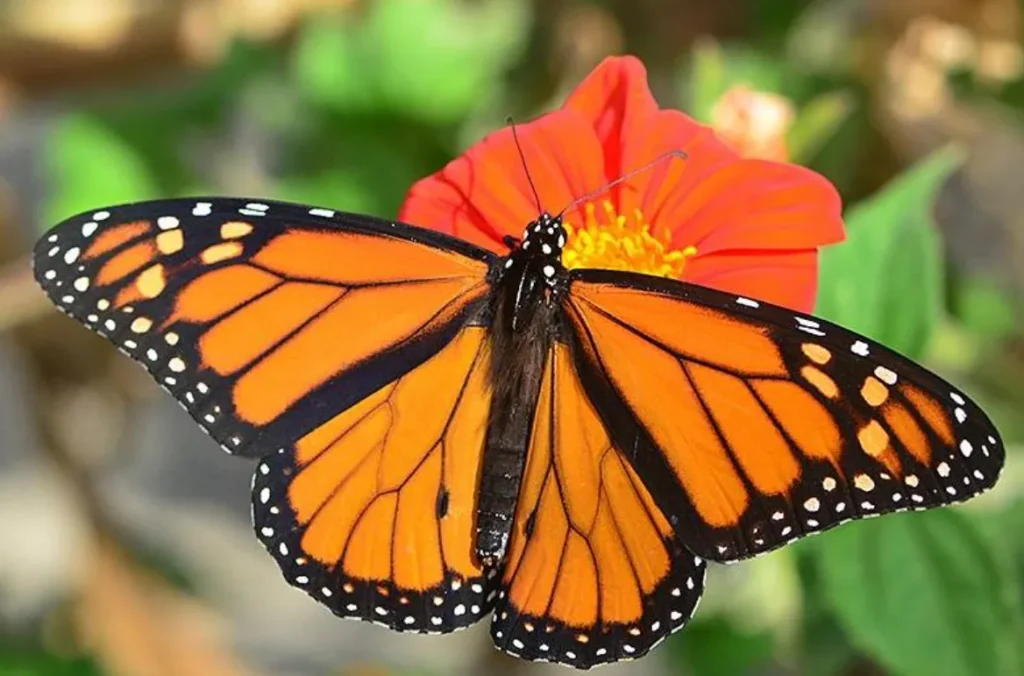
The monarch butterfly life cycle is especially famous because of the species’ long-distance migration.
Monarch butterflies travel thousands of kilometers between North America and Mexico. Their life cycle includes several generations each year, with the final generation migrating to overwintering sites.
Monarch caterpillars feed exclusively on milkweed plants, which provide toxins that protect them from predators.
Painted Lady Butterfly Life Cycle
The painted lady butterfly life cycle is another fascinating example of butterfly development.
Painted lady butterflies are among the most widespread species in the world. Their caterpillars feed on a wide variety of plants, which helps them adapt to many environments.
They are also known for their large migratory movements across continents.
Stages of Butterfly Life Cycle
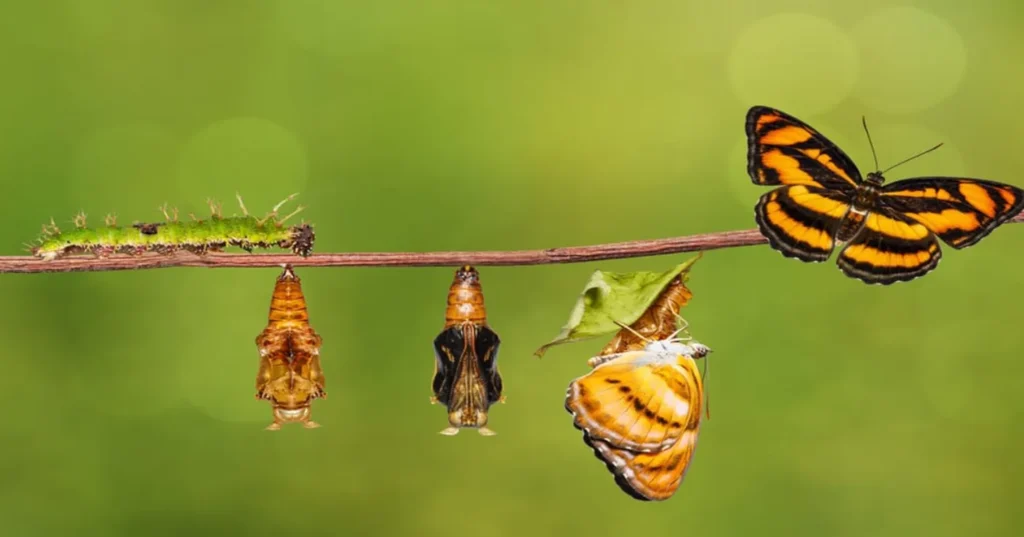
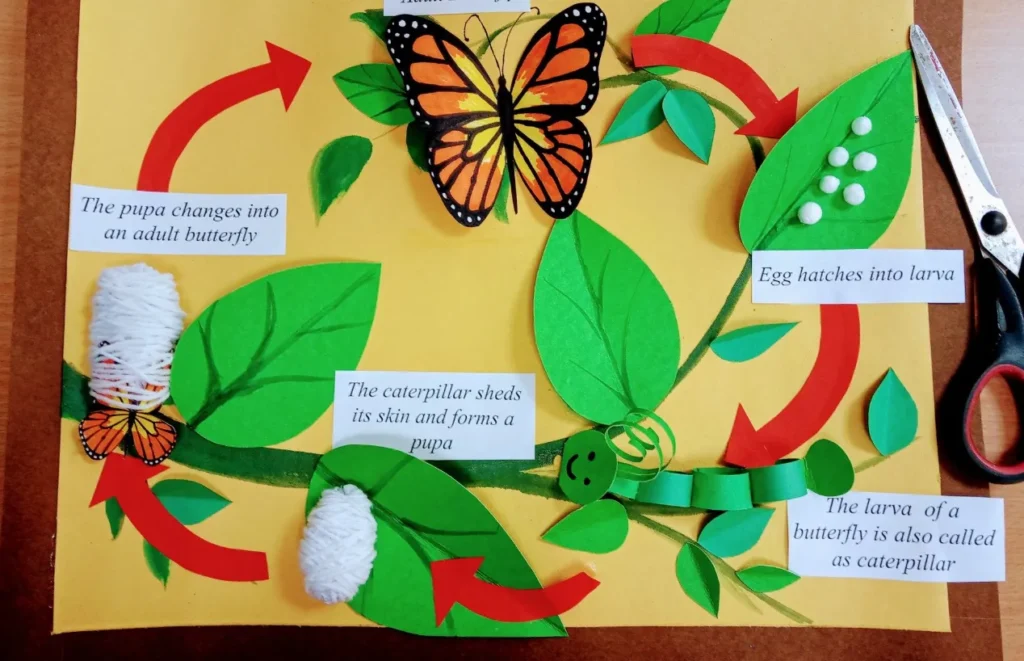
The stages of the butterfly life cycle include four key phases:
- Egg
- Larva (caterpillar)
- Pupa (chrysalis)
- Adult butterfly
Each stage plays a critical role in growth, survival, and reproduction. Understanding these stages helps scientists study insect development and ecology.
The History Of Their Scientific Naming
The scientific classification and naming of butterflies have evolved over centuries as scientists studied their anatomy, behavior, and genetics.
Here are key milestones in the history of butterfly scientific naming:
- Carl Linnaeus (1758)
- The Swedish scientist Carl Linnaeus developed the modern system of biological classification. He included many butterfly species in his book Systema Naturae and introduced the binomial naming system.
- Creation of the Order Lepidoptera
- Butterflies and moths were grouped under the order Lepidoptera. The name comes from Greek words meaning “scale wings.”
- Development of Family Classification
- Scientists later organized butterflies into families such as:
- Papilionidae (swallowtails)
- Nymphalidae (brush-footed butterflies)
- Pieridae (whites and sulfurs)
- Lycaenidae (blues and coppers)
- 19th Century Exploration
- During global exploration, naturalists discovered thousands of new butterfly species. Many were documented in scientific collections and museums.
- Modern Genetic Classification
- Today, DNA sequencing helps scientists refine butterfly classification and understand evolutionary relationships.
Scientific naming ensures that each butterfly species has a universal name recognized worldwide, helping researchers communicate clearly.
Their Life Cycle and Ability to Survive in Nature
The butterfly life cycle consists of four stages, each designed to help the insect grow and adapt to its environment.
Egg Stage
Female butterflies lay eggs on specific host plants.
Key characteristics include:
- Eggs are extremely small.
- They may be round, oval, or ridged.
- They hatch within a few days.
Choosing the right plant is critical because the caterpillar will eat it after hatching.
Larva (Caterpillar)
After hatching, the caterpillar begins feeding immediately.
Important features:
- Rapid growth through multiple molts.
- Strong jaws for chewing leaves.
- Ability to store energy for transformation.
Caterpillars may grow hundreds of times larger than their original size.
Pupa (Chrysalis)
During this stage, the caterpillar forms a protective shell called a chrysalis.
Inside the chrysalis:
- Body tissues break down.
- New structures, such as wings, develop.
This stage can last from several days to months, depending on the species.
Adult Butterfly
The adult butterfly emerges fully formed.
Its main goals include:
- Feeding on nectar
- Finding mates
- Reproducing
Adult butterflies also help pollinate plants while feeding.
Their Reproductive Process and Raising Their Children
Butterflies have fascinating reproductive behaviors that ensure the survival of future generations.
Mating Process
Adult butterflies locate mates using visual signals and chemical scents called pheromones.
Courtship behaviors may include:
- Flying displays
- Wing movements
- Release of chemical signals
Egg Laying
After mating, female butterflies search for suitable host plants.
Important factors include:
- Plant species suitable for caterpillars
- Protection from predators
- Availability of food
A female butterfly may lay hundreds of eggs during her lifetime.
Caterpillar Development
Once eggs hatch, caterpillars begin feeding immediately.
They rely entirely on the chosen plant for survival.
Some caterpillars have developed camouflage or toxins to avoid predators.
Survival Strategies
Butterflies protect their young through:
- Strategic egg placement
- Toxic plant consumption
- Rapid growth
These strategies help increase survival rates in nature.
Importance of Them in Ecosystem
Butterflies are essential components of ecosystems and provide numerous ecological benefits.
Pollination
Butterflies help pollinate many flowering plants.
While feeding on nectar, they transfer pollen between flowers, supporting plant reproduction.
Indicator Species
Butterflies are sensitive to environmental changes.
Scientists monitor butterfly populations to assess ecosystem health.
Declining butterfly numbers often signal habitat damage or climate change.
Food Source for Other Animals
Butterflies and caterpillars are part of the food chain.
They serve as food for:
- Birds
- Spiders
- Lizards
- Other insects
Supporting Biodiversity
Butterflies contribute to plant diversity by helping pollinate a wide range of flowers.
Frequently Asked Questions (FAQs)
1. What are the four stages of the butterfly life cycle?
The four stages are egg, larva (caterpillar), pupa (chrysalis), and adult butterfly.
2. How long does the butterfly’s life cycle take?
It depends on the species. Some butterflies complete their life cycle in 3–4 weeks, while others may take several months.
3. Why is metamorphosis important?
Metamorphosis allows butterflies to specialize in different life stages for feeding, growth, and reproduction.
4. What do caterpillars eat?
Most caterpillars eat plant leaves, often from specific host plants.
5. How do butterflies protect themselves?
Butterflies use camouflage, bright warning colors, and toxic chemicals from plants.
6. Where do butterflies lay eggs?
Butterflies lay eggs on plants that caterpillars can eat after hatching.
7. Do all butterflies migrate?
No. Only certain species, such as monarch butterflies, migrate long distances.
8. Why are butterflies important to humans?
They support pollination, help maintain ecosystems, and contribute to biodiversity.
Conclusion
The butterfly life cycle represents one of the most extraordinary transformations in nature. Through the stages of egg, caterpillar, chrysalis, and adult butterfly, these delicate insects demonstrate the incredible complexity of biological development.
Each stage of the butterfly’s life plays a vital role in its survival. Eggs ensure the continuation of the species, caterpillars focus on growth and energy storage, chrysalises protect the dramatic transformation process, and adult butterflies spread pollen while reproducing.
Beyond their beauty, butterflies provide essential ecological benefits. They act as pollinators, support food chains, and serve as indicators of environmental health. Their presence in gardens, forests, and meadows reflects a balanced ecosystem.
Scientific research continues to uncover new information about butterfly evolution, migration, genetics, and behavior. With modern technologies and conservation efforts, scientists are working to protect butterfly populations from threats such as habitat loss and climate change.
Understanding the butterfly life cycle also inspires curiosity and appreciation for nature. For students, educators, and nature enthusiasts, observing butterflies offers a powerful reminder of the delicate balance within ecosystems.
Protecting butterflies means protecting the plants, habitats, and ecological relationships that sustain them. By supporting pollinator-friendly gardens, reducing pesticide use, and conserving natural habitats, humans can help ensure that butterflies continue to thrive for generations to come.
The journey of a butterfly—from a tiny egg to a graceful flying insect—is not only a scientific marvel but also a symbol of transformation, resilience, and the beauty of the natural world.