
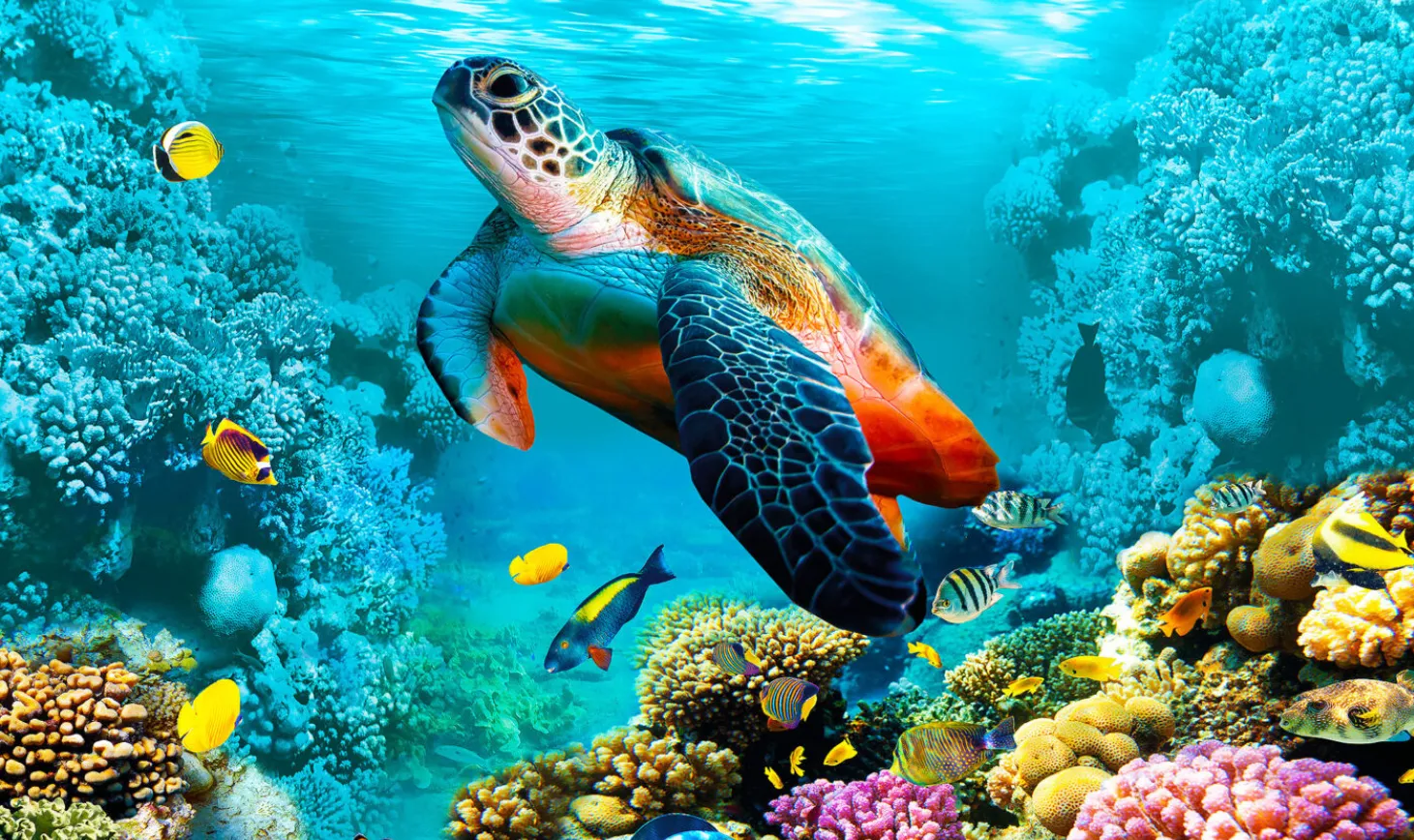
The sea turtle life cycle is one of the most fascinating journeys in the natural world. From fragile eggs buried in sandy beaches to powerful ocean travelers, sea turtles undergo incredible transformations. Species like the green sea turtle, leatherback, and loggerhead each follow similar stages, yet face unique challenges in survival.
Sea turtles have existed for over 100 million years, surviving mass extinctions and evolving into resilient marine reptiles. However, modern threats like pollution, climate change, and human interference now endanger their populations. Understanding their life cycle helps us appreciate their role and the importance of protecting them.
Quick Answers (Most Common Questions)
- How long do sea turtles live?
- Most sea turtles live between 50 and 100 years, depending on the species.
- How many eggs does a sea turtle lay?
- A female can lay 80–120 eggs per nest, several times per season.
- What is the hardest stage of the sea turtle life cycle?
- The hatchling stage is the most dangerous, with only 1 in 1,000 surviving to adulthood.
Quick Life Cycle Table
| Stage | Description | Duration |
| Egg Stage | Eggs are buried in sand nests on beaches | 45–70 days |
| Hatchling | Babies emerge and rush to the ocean | A few hours to days |
| Juvenile | Growth phase in the open ocean | 5–20 years |
| Subadult | Transition to coastal habitats | Several years |
| Adult | Maturity, migration, reproduction | 20–50+ years |
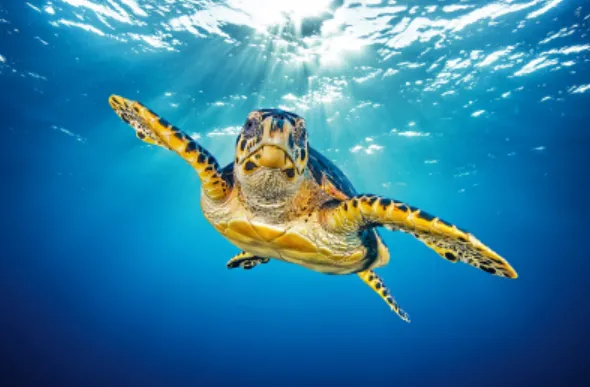
The History Of Their Scientific Naming
- Sea turtles belong to the order Testudines, which includes all turtles and tortoises.
- Marine turtles are divided into two main families:
- Cheloniidae (hard-shelled turtles like the green sea turtle)
- Dermochelyidae (leatherback sea turtle)
- The green sea turtle is scientifically named Chelonia mydas.
- The leatherback sea turtle is Dermochelys coriacea, named for its unique leathery shell.
- Early classification began in the 18th century by Carl Linnaeus, the father of taxonomy.
- Scientific naming helps researchers track species, migration patterns, and conservation status.
- Over time, DNA studies have refined classifications, revealing evolutionary links between species.
This naming system ensures global consistency in research and conservation efforts.
Their Evolution And Their Origin
Sea turtles originated over 100 million years ago, during the time of dinosaurs. Fossil records show that their ancestors were land-dwelling reptiles that gradually adapted to marine life.
Early marine turtles developed streamlined bodies and flippers, allowing them to swim efficiently. Unlike freshwater turtles, sea turtles lost the ability to retract their heads fully into their shells. This adaptation made them faster but more vulnerable.
The leatherback sea turtle is considered the most ancient species still alive today. Its flexible shell and ability to dive deep—over 1,000 meters—show how evolution shaped it for survival in extreme ocean conditions.
During evolution, sea turtles developed:
- Salt glands to remove excess salt
- Strong flippers for long-distance migration
- Navigation abilities using Earth’s magnetic field
These adaptations allow them to travel thousands of kilometers between feeding and nesting grounds.
Their Main Food and Its Collection Process
Sea turtles have diverse diets depending on their species and life stage.
Main Food Sources
- Green sea turtles: Seagrass and algae
- Leatherback turtles: Jellyfish
- Loggerhead turtles: Crabs, mollusks, and shellfish
- Hawksbill turtles: Sponges and coral organisms
Food Collection Process
- Use strong jaws to crush or tear food
- Swim long distances to find feeding grounds
- Dive deep for jellyfish or bottom-dwelling prey
- Use vision and smell to locate food
Green sea turtles play a crucial role in maintaining seagrass beds by grazing regularly. Leatherbacks help control jellyfish populations, preventing ecosystem imbalance.
Their feeding habits are essential for ocean health, making them keystone species in marine ecosystems.
Their Life Cycle and Ability to Survive in Nature
Egg Stage
Female turtles return to their birthplace beaches to lay eggs. This behavior is called natal homing.
Hatchling Stage
Baby sea turtles emerge at night and head toward the ocean using moonlight as a guide.
Juvenile Stage
They drift in ocean currents, hiding in seaweed for protection.
Adult Stage
Adults migrate long distances and return to nest every few years.
Survival Abilities
- Strong shells for protection
- Camouflage in ocean environments
- Long-distance navigation skills
- Ability to hold breath for hours
Despite these abilities, survival rates remain low due to predators and human threats.
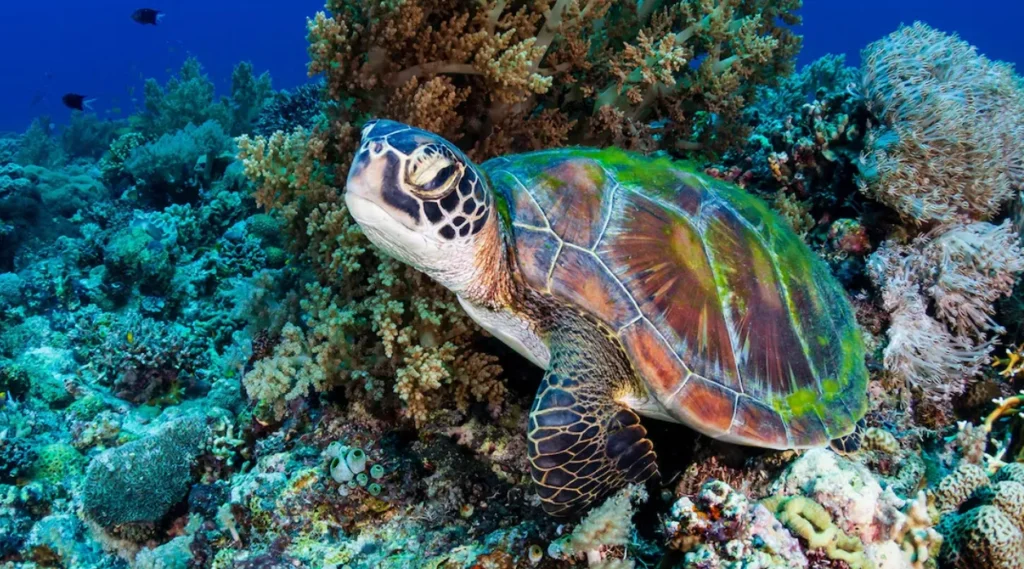
Their Reproductive Process and Raising Their Children
- Female turtles mate in the ocean before nesting season
- They come ashore at night to dig nests
- Lay 80–120 eggs per nest
- Cover nests with sand for protection
- Incubation lasts about 2 months
- Temperature determines gender (warmer = more females)
- Hatchlings emerge together and rush to the sea
- No parental care after hatching
- Only a small percentage survives to adulthood
- Survivors grow slowly and mature after 20–30 years
This reproductive strategy ensures that at least some offspring survive despite high mortality rates.
Importance of Them in this Ecosystem
Maintaining Seagrass Beds
Green sea turtles keep seagrass short and healthy.
Balancing Marine Food Chains
Leatherbacks control jellyfish populations.
Supporting Coral Reefs
Hawksbill turtles help maintain reef health.
Nutrient Cycling
Eggs provide nutrients to beach ecosystems.
Sea turtles are vital for maintaining ocean balance and biodiversity.
Important Things That You Need To Know
Sea turtles are not only biologically fascinating but also culturally significant. From sea turtle drawings to symbolic tattoos, they symbolize longevity, wisdom, and resilience.
The green sea turtle is one of the most studied species due to its ecological importance. Meanwhile, the leatherback turtle is unique for its size and diet, feeding mainly on jellyfish.
Many people are curious about unusual topics, such as the leatherback sea turtle bites. While rare, leatherbacks are generally non-aggressive and avoid human interaction.
The journey of a baby sea turtle is one of nature’s most dramatic survival stories. From the moment they hatch, they face predators like birds, crabs, and fish.
Sea turtles also inspire creativity in art and design. A sea turtle tattoo often symbolizes protection, endurance, and a connection to the ocean.
Understanding these aspects helps people connect emotionally with sea turtles, encouraging conservation efforts worldwide.
What to do to protect them in nature and save the system for the future
- Reduce plastic use to prevent ocean pollution
- Avoid disturbing nesting beaches
- Support conservation organizations
- Use turtle-friendly fishing gear
- Reduce artificial lighting near beaches
- Participate in beach cleanups
- Educate others about sea turtle protection
- Support sustainable seafood choices
These actions can significantly improve survival rates.
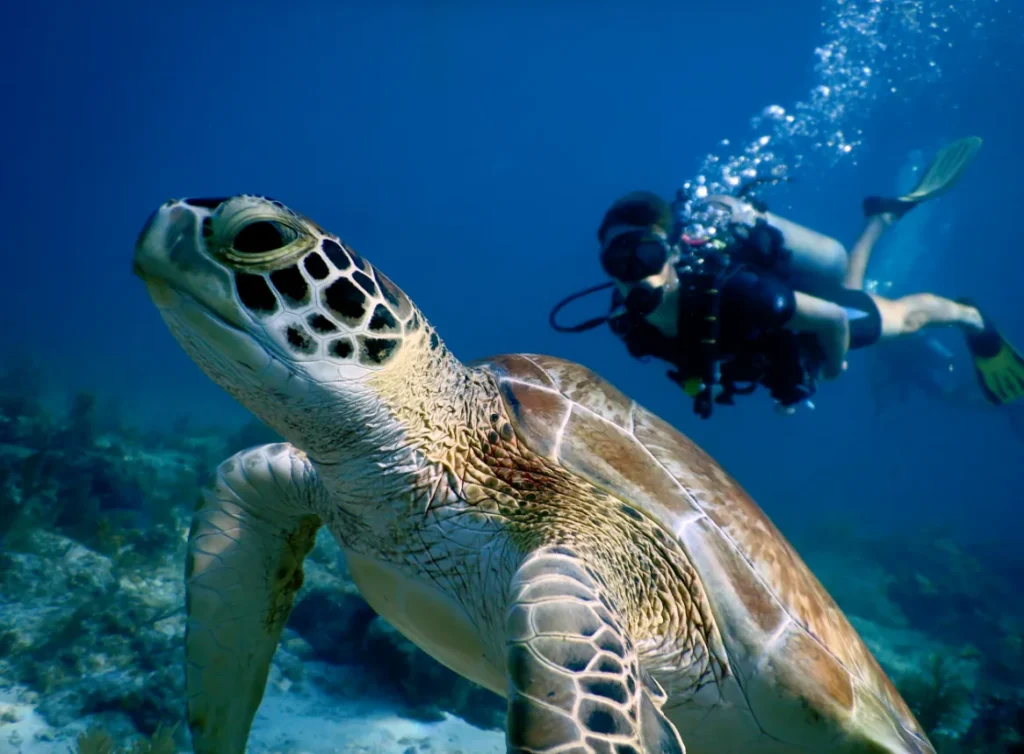
Frequently Asked Questions (FAQs)
- How long does a sea turtle’s life cycle take?
- It can take 20–50 years to complete a full life cycle.
- Why do sea turtles return to the same beach?
- They use Earth’s magnetic field to locate their birthplace.
- What eats baby sea turtles?
- Birds, crabs, and fish are common predators.
- Can sea turtles breathe underwater?
- No, they must surface for air.
- How far can sea turtles travel?
- Thousands of kilometers across oceans.
- Are sea turtles endangered?
- Yes, most species are threatened or endangered.
- What is the biggest sea turtle species?
- The leatherback sea turtle.
- Do sea turtles have teeth?
- No, they have strong beaks instead.
Conclusion
The sea turtle life cycle is a remarkable journey filled with challenges, resilience, and adaptation. From fragile eggs buried in sand to powerful ocean navigators, sea turtles demonstrate the beauty of nature’s design.
Despite surviving millions of years, they now face unprecedented threats from human activity. Pollution, climate change, and habitat destruction continue to reduce their populations. However, with awareness and conservation efforts, their future can still be protected.
Understanding their life cycle not only deepens our appreciation but also motivates us to act. Every small effort—from reducing plastic to protecting nesting beaches—plays a role in preserving these ancient marine creatures.
Also Read: angiosperm life cycle