
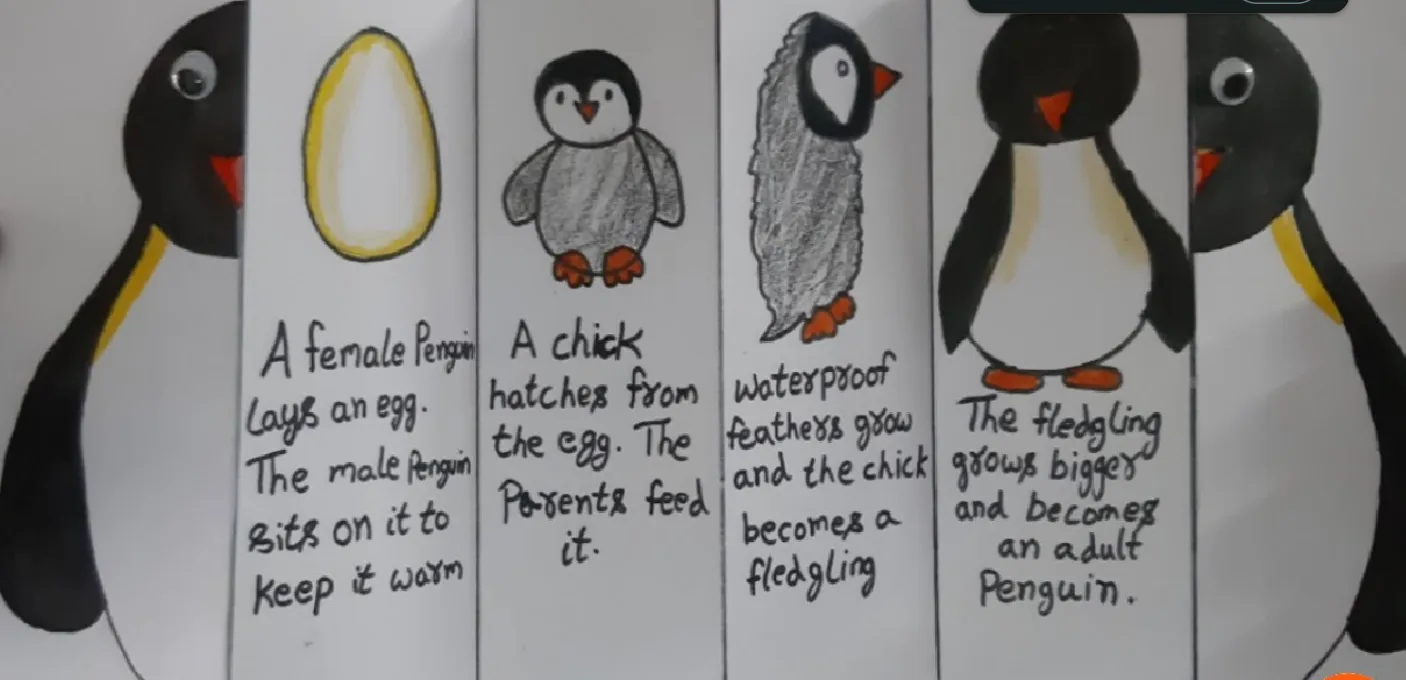
The penguin life cycle is one of the most fascinating journeys in the animal kingdom. These flightless birds are perfectly adapted to some of the harshest environments on Earth, from the icy landscapes of Antarctica to temperate coastal regions. Understanding their life cycle helps us appreciate how penguins survive, reproduce, and maintain ecological balance.
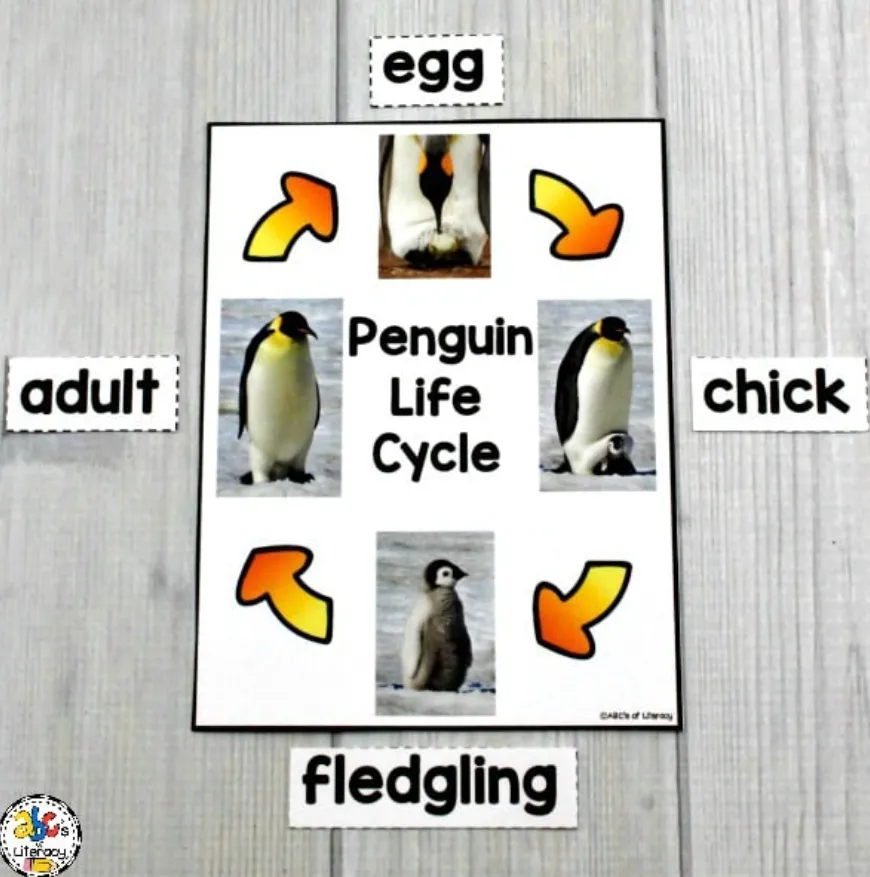
Penguins go through several stages—egg, chick (baby penguin), juvenile, and adult. Each stage is shaped by extreme weather, predators, and food availability. Unlike many birds, penguins rely heavily on teamwork, especially when raising their young. Their strong social structure plays a key role in survival.
🔎 Quick Answers (Most Common Questions)
1. What are the stages of the penguin life cycle?
Egg → Chick (baby penguin) → Juvenile → Adult.
2. How long do penguins live?
Most penguins live between 15 and 20 years in the wild, depending on the species.
3. Where do penguins lay eggs?
Penguins typically lay eggs on land or ice, often in colonies for protection.
Penguins are more than just adorable animals—they are vital indicators of ocean health and climate change. Let’s explore their life in depth.
Quick Life Cycle Table
| Stage | Description | Duration |
| Egg | Laid by a female; incubated by one or both parents | 30–65 days |
| Chick (Baby) | Newly hatched; depends fully on parents for warmth and food | 2–3 months |
| Juvenile | Begins to develop waterproof feathers; starts swimming and hunting | 3–12 months |
| Adult | Fully mature; capable of reproduction and independent survival | 3–8 years (maturity) |
The History Of Their Scientific Naming
The scientific classification of penguins has evolved significantly over time. Here are the key points:
- Penguins belong to the family Spheniscidae, derived from the Greek word “spheniskos”, meaning “small wedge.”
- Early explorers initially misidentified penguins as northern seabirds because of their similar black-and-white appearance.
- The name “penguin” may have originated from the Welsh term “pen gwyn”, meaning “white head.”
- Scientists later classified penguins as flightless birds adapted for marine life.
- There are currently 18 recognized species, including the well-known emperor and macaroni penguin.
- Taxonomy has been refined using DNA studies, revealing evolutionary relationships among species.
This history of scientific naming reflects how our understanding of penguins has advanced through modern research.
Their Evolution And Their Origin
Penguins have a long evolutionary history dating back over 60 million years. Fossil evidence shows that early penguin ancestors were much larger than today’s species and lived shortly after the extinction of dinosaurs.
Initially, penguins could fly. Over time, they evolved into flightless birds, with their wings transforming into flippers, making them excellent swimmers. This adaptation allowed them to thrive in ocean environments where food was abundant.
The earliest known penguin fossils were found in New Zealand and Antarctica, indicating that penguins originated in the Southern Hemisphere. As continents shifted, penguins spread across different regions, adapting to various climates.
Unlike many birds, penguins evolved dense bones to reduce buoyancy, enabling them to dive deep underwater. Their streamlined bodies and strong flippers allow them to reach speeds of up to 15 km/h (9 mph) while swimming.
Evolution also shaped their unique survival strategies. For example, emperor penguins developed the ability to breed during extreme Antarctic winters, showcasing remarkable resilience.
Today, penguins are considered highly specialized seabirds, perfectly adapted to marine life but vulnerable to environmental changes.
Their main food and its collection process
Penguins are carnivorous and depend entirely on marine life for survival. Their diet varies depending on species and habitat.
🐟 Main Food Sources
- Fish (anchovies, sardines)
- Krill (tiny shrimp-like organisms)
- Squid
- Small crustaceans
🌊 Food Collection Process
- Penguins dive into the ocean using their powerful flippers.
- They can dive to depths of up to 500 meters (especially emperor penguins).
- Their sharp beaks and backward-facing spines help पकड़ slippery prey.
- Penguins often hunt in groups to increase success rates.
- Some species travel long distances (over 100 km) to find food.
🧊 Adaptations for Feeding
- Waterproof feathers keep them warm.
- High oxygen storage allows long dives.
- Excellent vision underwater improves hunting efficiency.
Penguins play a crucial role in marine food chains, balancing populations of fish and krill.
Important Things That You Need To Know
Penguins are widely recognized, but there are many interesting aspects beyond the basic penguin life cycle. Let’s explore some important related topics.
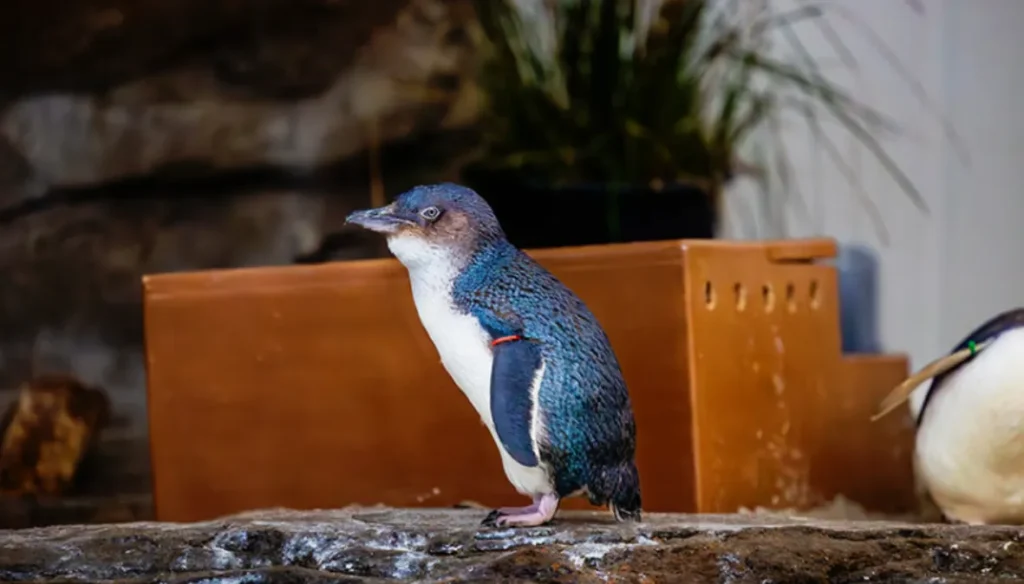
The penguin symbolizes adaptability. From icy Antarctica to warmer coasts, different species thrive in diverse conditions. For example, the macaroni penguin is known for its distinctive yellow crest and lives in sub-Antarctic regions.
In popular culture, the penguin cast (from movies and documentaries) has helped raise awareness of conservation. Films often portray penguins as family-oriented animals, which is accurate.
Art enthusiasts enjoy penguin drawing, capturing their charming appearance and unique posture. Their tuxedo-like coloring makes them instantly recognizable.
Another fascinating aspect is the baby penguin, also called a chick. These chicks are fluffy and grey, unlike the sleek black-and-white adults. They rely heavily on their parents for warmth and food during the early stages.
Penguins are social creatures that live in large colonies. This behavior helps protect them from predators and harsh environmental conditions.
Understanding these aspects helps us appreciate penguins beyond just their life cycle—they are complex, intelligent, and socially structured animals.
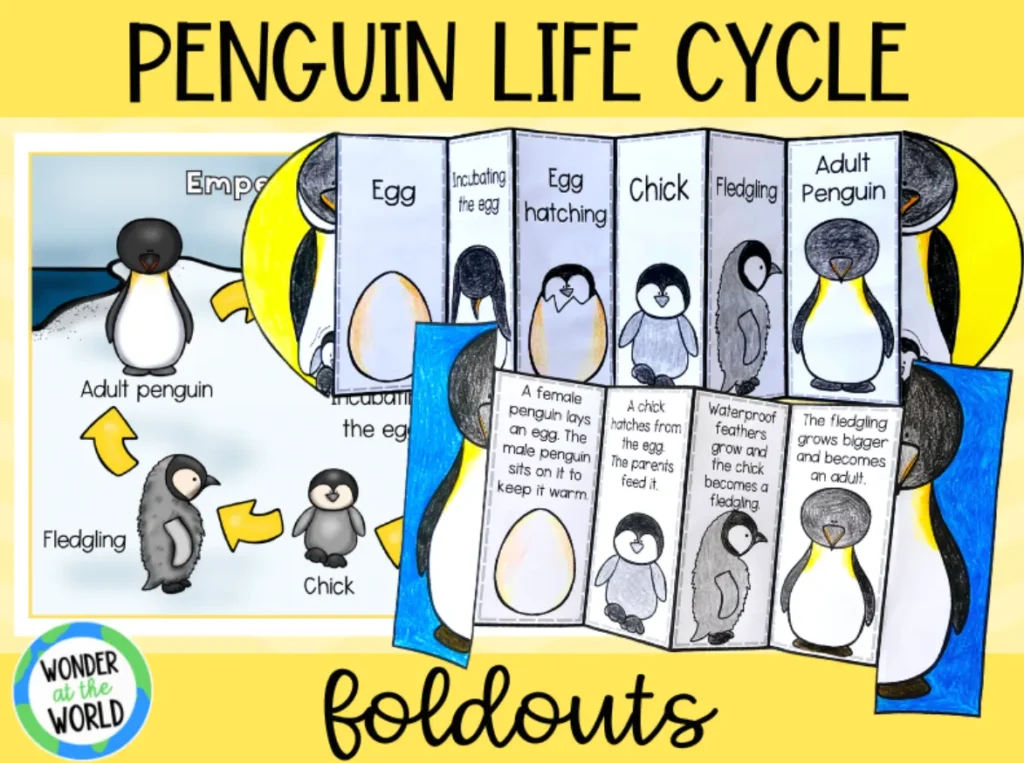
Their life cycle and ability to survive in nature
🥚 Egg Stage
Penguins lay one or two eggs, depending on the species. Parents take turns incubating the egg, keeping it warm to prevent it from freezing.
🐣 Chick Stage
Once hatched, the chick (baby penguin) is covered in soft down feathers. It cannot regulate body temperature and depends entirely on its parents.
🐧 Juvenile Stage
As the chick grows, it develops waterproof feathers. This stage is critical as the penguin learns to swim and hunt.
🌍 Adult Stage
Adult penguins are independent and capable of reproduction. They return to breeding grounds annually.
Survival Abilities
- Thick fat layer (blubber) for insulation
- Huddling behavior to conserve heat
- Camouflage coloring (black back, white belly)
- Strong swimming skills to escape predators
These adaptations ensure penguins survive even in extreme environments.
Their Reproductive Process and raising their children
Penguin reproduction is a well-coordinated process involving both parents.
🐧 Key Points
- Penguins form monogamous pairs during the breeding season.
- Females lay eggs, and males often take over incubation.
- In emperor penguins, males balance eggs on their feet to keep them warm.
- Parents take turns hunting and feeding the chick.
- Chicks are fed regurgitated food.
- Some species form “crèches” (groups of chicks) for protection.
- Parenting continues until chicks are ready to swim independently.
This shared responsibility increases survival rates and ensures proper growth of young penguins.
The importance of them in this Ecosystem
🌊 Marine Balance
Penguins help regulate fish and krill populations, maintaining ecological balance.
🧬 Indicator Species
They act as indicators of ocean health and climate change.
🐟 Food Chain Role
Penguins are both predators and prey, linking different levels of the food chain.
🌍 Environmental Impact
Changes in penguin populations often signal environmental issues such as global warming.
Their presence is essential for a healthy marine ecosystem.
What to do to protect them in nature and save the system for the future
- 🌱 Reduce carbon emissions to slow climate change
- 🐟 Prevent overfishing to ensure food availability
- 🚯 Reduce ocean pollution and plastic waste
- 🛑 Protect breeding habitats from human disturbance
- 📚 Support conservation organizations
- 🌊 Promote sustainable fishing practices
- 🧪 Encourage scientific research and monitoring
- 🌍 Raise awareness through education and media
Protecting penguins also protects the entire marine Ecosystem.
Frequently Asked Questions (FAQs)
1. How many stages are in the penguin life cycle?
There are four main stages: egg, chick, juvenile, and adult.
2. What is a baby penguin called?
A baby penguin is called a chick.
3. How long do penguin eggs take to hatch?
Usually between 30 and 65 days, depending on the species.
4. What do penguins eat?
Fish, krill, squid, and small marine animals.
5. Can penguins fly?
No, they are flightless birds but excellent swimmers.
6. Where do penguins live?
Mostly in the Southern Hemisphere, especially Antarctica.
7. How do penguins survive cold weather?
They use blubber, feathers, and huddling behavior.
8. Are penguins endangered?
Some species are endangered due to climate change and human activities.
Conclusion
The penguin life cycle is a remarkable journey of survival, adaptation, and cooperation. From fragile eggs to strong adult swimmers, penguins demonstrate resilience in some of the harshest environments on Earth.
Their ability to survive extreme cold, hunt efficiently, and raise their young through teamwork makes them unique among birds. However, their future is increasingly threatened by climate change, pollution, and habitat loss.
By understanding their life cycle and ecological importance, we can take meaningful steps to protect them. Conservation efforts not only safeguard penguins but also preserve the balance of marine ecosystems.
Penguins are more than just charming creatures—they are vital indicators of our planet’s health. Protecting them ensures a better future for both wildlife and humanity.
Also Read: cockroach life cycle