
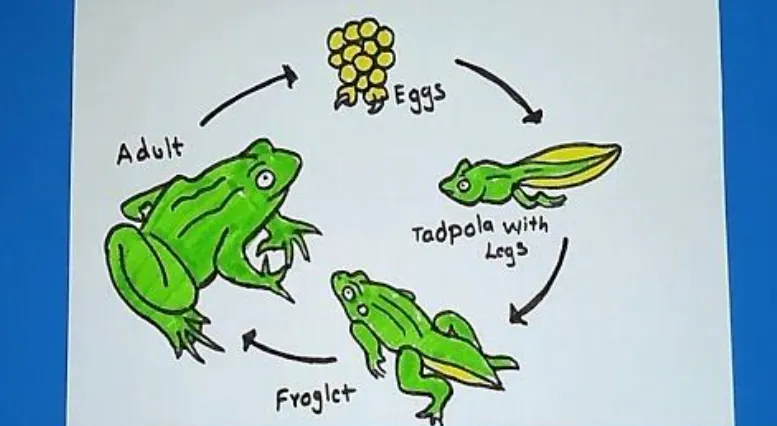
The frog life cycle is one of the most fascinating biological transformations in the animal kingdom. Frogs belong to a group of animals called amphibians, meaning they can live both in water and on land. Their development from tiny eggs to fully grown frogs involves several dramatic changes, a process known as metamorphosis. Because of this transformation, the frog life cycle is widely studied in schools, wildlife research, and environmental science.
Understanding the frog life cycle helps scientists, teachers, and students learn about evolution, reproduction, and the balance of ecosystems. The process typically begins with eggs laid in water and ends with an adult frog capable of reproducing and continuing the cycle. During this journey, frogs pass through several distinct stages that show how organisms adapt to their environments.
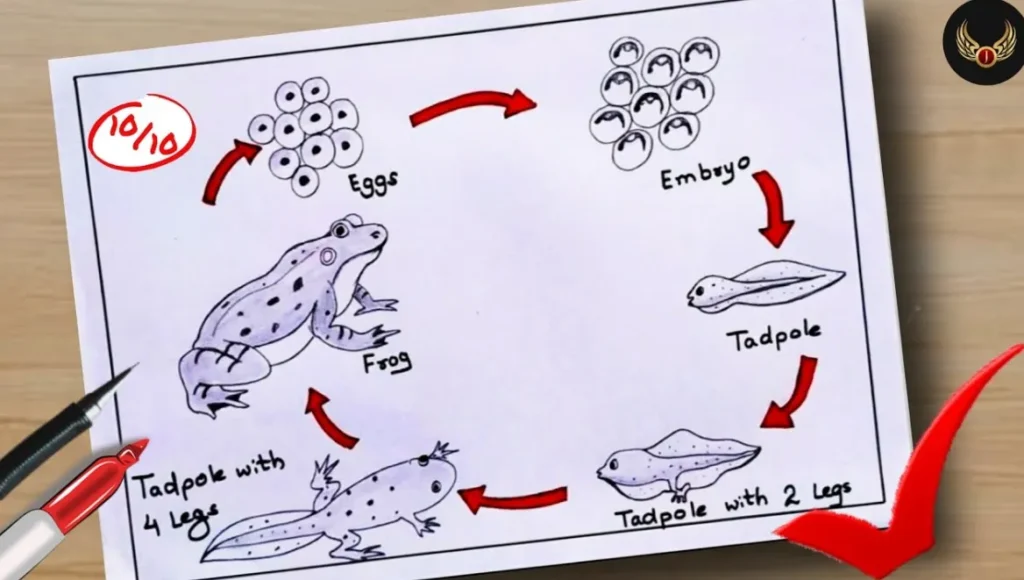
Scientists usually describe 7 stages in the frog life cycle. These stages include egg, embryo, tadpole, tadpole with legs, froglet, young frog, and adult frog. Each stage demonstrates remarkable biological changes, including the development of lungs, limbs, and a digestive system suited to life on land.
The frog life cycle is also an excellent educational model for teaching children about growth and transformation. That is why many teachers use the frog life cycle in worksheets and diagrams for science classes. Visual tools, such as a frog life cycle diagram, make it easier to understand how frogs transition from aquatic to land-dwelling amphibians.
In recent environmental studies up to 2026, frogs have also become important indicators of ecosystem health. Their sensitivity to pollution and climate change means changes in frog populations can signal environmental problems. Learning about their life cycle, therefore, goes beyond simple biology—it helps us understand the health of our planet.
In this article, we will explore the origins of frogs, their scientific classification, the stages of their life cycle, their reproductive process, and their vital role in ecosystems.
Their Evolution And Their Origin
Frogs have a long evolutionary history that dates back more than 250 million years. They belong to the order Anura, which includes frogs and toads. Fossil evidence shows that early frog-like amphibians appeared during the Triassic period, making them one of the oldest groups of land vertebrates still alive today.
Scientists believe frogs evolved from primitive amphibians that lived in swampy environments. These early amphibians gradually developed features that enabled them to adapt to both aquatic and terrestrial habitats.
Early Amphibian Ancestors
The earliest frog-like species discovered by paleontologists is called Triadobatrachus massinoti, found in Madagascar. This ancient amphibian lived around 250 million years ago and showed early features of modern frogs.
However, it still lacked the powerful jumping legs that modern frogs have today.
Over time, natural selection favored amphibians that could jump efficiently to escape predators and catch prey. This led to the development of strong hind legs, lightweight bodies, and flexible skeletal structures.
Adaptation Through Time
Frogs evolved unique survival features such as:
- Moist skin that allows oxygen absorption
- Powerful hind legs for jumping
- Webbed feet for swimming
- Bulging eyes for wide-angle vision
These adaptations helped frogs spread across almost every continent on Earth except Antarctica.
Diversification of Frog Species
Today, scientists have identified over 7,500 frog species worldwide. These species live in diverse habitats, including rainforests, deserts, wetlands, and even mountainous regions.
Some well-known frog families include:
- Ranidae – true frogs
- Hylidae – tree frogs
- Bufonidae – toads
- Dendrobatidae – poison dart frogs
Each species evolved specialized traits that help it survive in different environments.
Evolutionary Importance
The frog life cycle itself reflects evolutionary adaptation. Tadpoles live entirely in water and breathe using gills, similar to fish. As they mature, they develop lungs and limbs, allowing them to live on land.
This transformation demonstrates how amphibians bridge the gap between aquatic and terrestrial animals.
Modern scientific research continues to study frogs because their evolutionary history helps scientists understand vertebrate development, environmental adaptation, and biodiversity.
Important Things That You Need To Know
Many people search for information about frogs using related terms such as frog life cycle stages, frog life cycle diagram, frog life cycle worksheet, and frog life cycle for kids. These concepts are essential for understanding how frogs grow and transform.
Frog Life Cycle Stages
The frog life cycle typically consists of several stages that describe how frogs develop from eggs into adults. These stages demonstrate metamorphosis, a biological process where the organism undergoes major physical changes.
Frog Life Cycle Diagram
A frog life cycle diagram visually explains the transformation from egg to adult frog. Educational diagrams usually show the stages in a circular format to emphasize that the cycle repeats continuously.
Frog Life Cycle Worksheet
Teachers often use frog life cycle worksheets to help students identify each stage. These worksheets include labeling exercises, coloring activities, and sequencing tasks that make learning interactive.
Frog Life Cycle for Kids
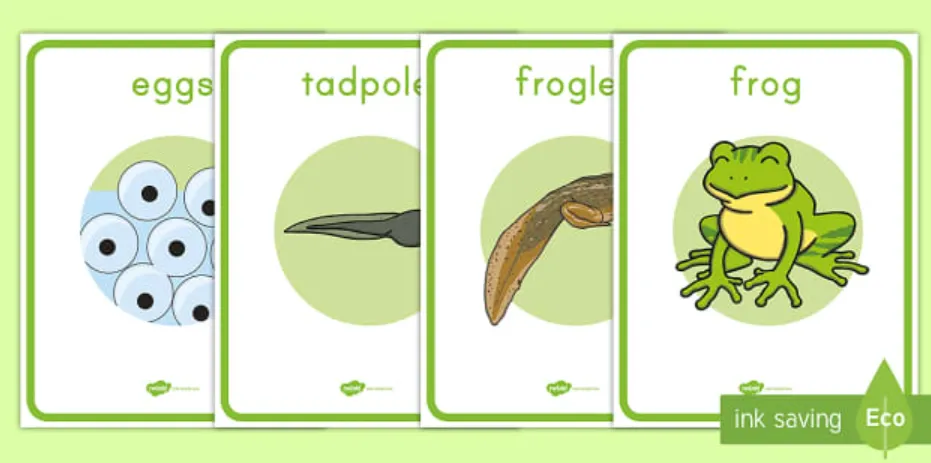
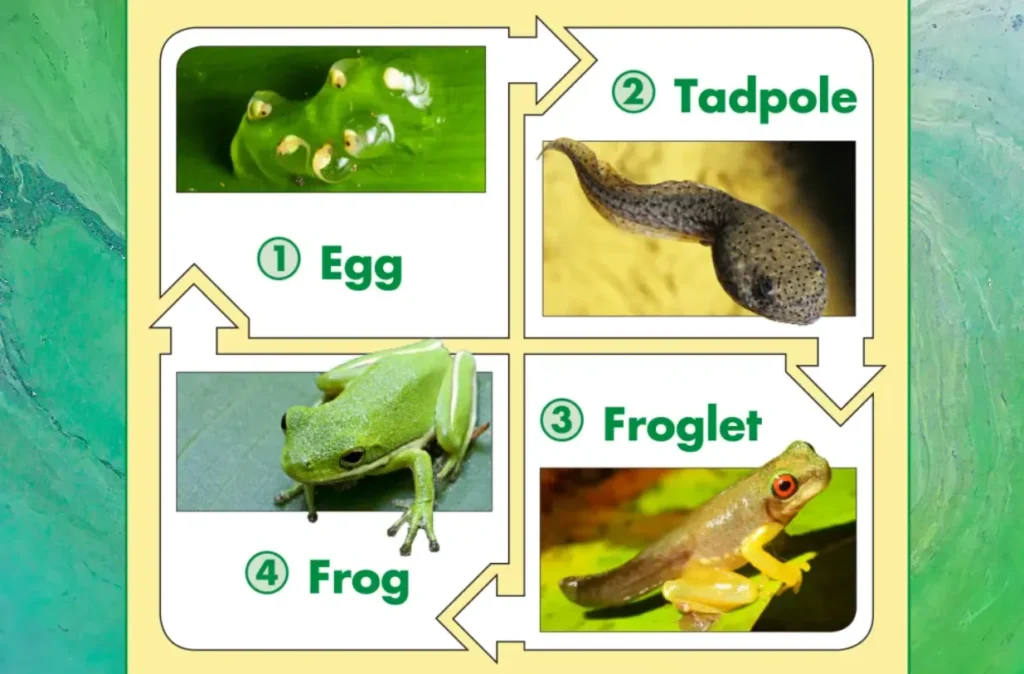
The frog life cycle for kids is commonly simplified into four major stages:
- Egg
- Tadpole
- Froglet
- Adult Frog
This simplified version helps young learners understand the basic process without complicated scientific details.
Educational Importance
Using diagrams, worksheets, and simplified explanations improves science education. Children can visually track how frogs grow and how metamorphosis works.
Understanding these concepts also helps students appreciate wildlife conservation and environmental science.
The History Of Their Scientific Naming
The scientific naming of frogs follows the binomial nomenclature system developed by Swedish scientist Carl Linnaeus in the 18th century. This system assigns every species a two-part scientific name consisting of genus and species.
Below are key historical points related to the scientific classification of frogs.
1. Early Scientific Classification
Before modern taxonomy, frogs were grouped with other amphibians without clear distinctions. Early naturalists described them based on physical appearance rather than evolutionary relationships.
2. Linnaeus and Binomial Nomenclature
Carl Linnaeus introduced the system of scientific naming in 1735. Under this system, each frog species receives a Latin-based name.
For example:
- Rana temporaria – Common frog
- Lithobates catesbeianus – American bullfrog
- Hyla cinerea – Green tree frog
This system made it easier for scientists worldwide to communicate about species.
3. Creation of the Order Anura
Scientists later classified frogs under the order Anura, which means “without tail.” This name reflects the fact that adult frogs lack tails, unlike their tadpole stage.
4. Modern Taxonomy Advances
With advances in DNA analysis, scientists have refined frog classification. Genetic studies have helped researchers understand evolutionary relationships between frog species.
5. Current Scientific Records
As of 2026, over 7,500 species of frogs have been scientifically named and classified. However, new species continue to be discovered, especially in tropical rainforests.
Their Life Cycle and Ability to Survive in Nature
The frog life cycle is a perfect example of biological metamorphosis. Frogs pass through several stages before reaching adulthood, and each stage is adapted to a specific environment.
1. Egg Stage
The life cycle begins when female frogs lay hundreds or even thousands of eggs in water. These eggs are protected by a jelly-like coating that keeps them moist and safe from predators.
2. Embryo Stage
Inside the egg, the embryo begins developing. Within days, the embryo forms basic body structures and prepares to hatch.
3. Tadpole Stage
Once hatched, the baby frog becomes a tadpole. Tadpoles live entirely in water and breathe using gills. They mainly eat algae and plant material.
4. Tadpole With Legs
As the tadpole grows, it develops hind legs and later front legs. At the same time, lungs begin to form, preparing the frog for life outside water.
5. Froglet Stage
The froglet looks like a miniature frog but still has a small tail. During this stage, the tail gradually shrinks as the frog adapts to land.
6. Young Frog
At this stage, the frog has lost its tail completely and begins hunting insects.
7. Adult Frog
The final stage is the adult frog. Adult frogs can reproduce and restart the life cycle.
Survival Strategies
Frogs survive in nature through:
- Camouflage coloring
- Jumping ability to escape predators
- Sticky tongues for catching insects
- Moist skin that allows breathing
These survival traits make frogs successful amphibians across many ecosystems.
Their Reproductive Process and Raising Their Children
Frog reproduction usually occurs in water and involves unique behaviors that ensure successful fertilization and development.
1. Mating Calls
Male frogs produce loud croaking sounds to attract females. Each frog species has a unique mating call that helps females identify suitable partners.
2. Amplexus (Mating Position)
During reproduction, the male frog holds the female in a position called amplexus. This allows fertilization to occur as the female releases eggs.
3. External Fertilization
Unlike many animals, frogs fertilize eggs externally. The male releases sperm over the eggs as they are laid in water.
4. Egg Clusters
Female frogs may lay hundreds or thousands of eggs at once. The jelly-like mass protects the eggs from drying out.
5. Minimal Parental Care
Most frog species provide little parental care. After laying eggs, adults usually leave them to develop on their own.
However, some species protect their eggs by carrying them on their backs or inside special body pouches.
6. Growth of Tadpoles
Once hatched, tadpoles begin feeding and growing quickly. Within weeks or months, they transform into froglets.
Importance of Them in Ecosystem
Frogs play a crucial role in maintaining ecological balance. Their presence benefits both aquatic and terrestrial ecosystems.
1. Natural Pest Control
Frogs eat large numbers of insects, including mosquitoes and crop pests. This helps control insect populations naturally.
2. Food Source for Other Animals
Frogs are an important food source for birds, snakes, fish, and mammals. They are a key link in the food chain.
3. Environmental Indicators
Frogs are sensitive to pollution and climate change. Scientists often monitor frog populations to measure environmental health.
4. Nutrient Cycling
Frogs help move nutrients between aquatic and terrestrial ecosystems through their feeding and movement.
5. Medical Research
Frog skin secretions have inspired research into antibiotics and medical treatments.
Frequently Asked Questions (FAQs)
1. What are the stages of a frog’s life cycle?
The stages include egg, embryo, tadpole, tadpole with legs, froglet, young frog, and adult frog.
2. How long does the frog’s life cycle take?
It typically takes 12–16 weeks, but the timeline varies depending on species and environmental conditions.
3. Why do frogs lay eggs in water?
Frog eggs require moisture to survive and develop properly.
4. What do tadpoles eat?
Tadpoles usually eat algae, plant matter, and microscopic organisms.
5. How do tadpoles become frogs?
They undergo metamorphosis, developing legs and lungs and losing their tails.
6. Do all frogs go through the same life cycle?
Most frogs follow a similar process, but some species have slight variations.
7. How many eggs can a frog lay?
A female frog may lay hundreds to thousands of eggs at once.
8. Why are frogs important for the environment?
They control insect populations and serve as indicators of environmental health.
Conclusion
The frog life cycle is one of the most remarkable examples of transformation in nature. From tiny eggs floating in water to fully grown amphibians capable of jumping across land, frogs undergo a fascinating journey of growth and adaptation. This process, known as metamorphosis, highlights the incredible biological mechanisms that allow frogs to survive in both aquatic and terrestrial environments.
The 7 stages of the frog life cycle demonstrate how organisms adapt to changing conditions during development. Tadpoles begin life as aquatic creatures with gills, but gradually transform into land-dwelling frogs with lungs and powerful legs. Each stage serves a purpose and prepares the frog for its next phase of life.
Beyond biology, frogs play a vital role in maintaining healthy ecosystems. They control insect populations, serve as food for many predators, and act as environmental indicators that warn scientists about pollution and climate change. Because of their sensitivity to environmental changes, protecting frog populations has become an important conservation priority worldwide.
Educational tools such as frog life cycle diagrams, worksheets, and simplified explanations help students and nature enthusiasts understand these processes. Learning about the frog life cycle not only teaches us about amphibians but also reminds us of the delicate balance within nature.
As scientific research continues in 2026 and beyond, frogs remain a key focus in studies related to biodiversity, environmental protection, and evolutionary biology. Protecting their habitats ensures that future generations can continue to learn from these fascinating amphibians and the extraordinary journey of their life cycle.
Also Read About: Butterfly Life Cycle