
The angiosperm life cycle is one of the most fascinating biological processes in the plant kingdom. Angiosperms, commonly known as flowering plants, dominate Earth’s ecosystems and play a crucial role in sustaining life. From tiny grasses to towering trees, these plants follow a highly organized life cycle that ensures reproduction, adaptation, and survival across generations.
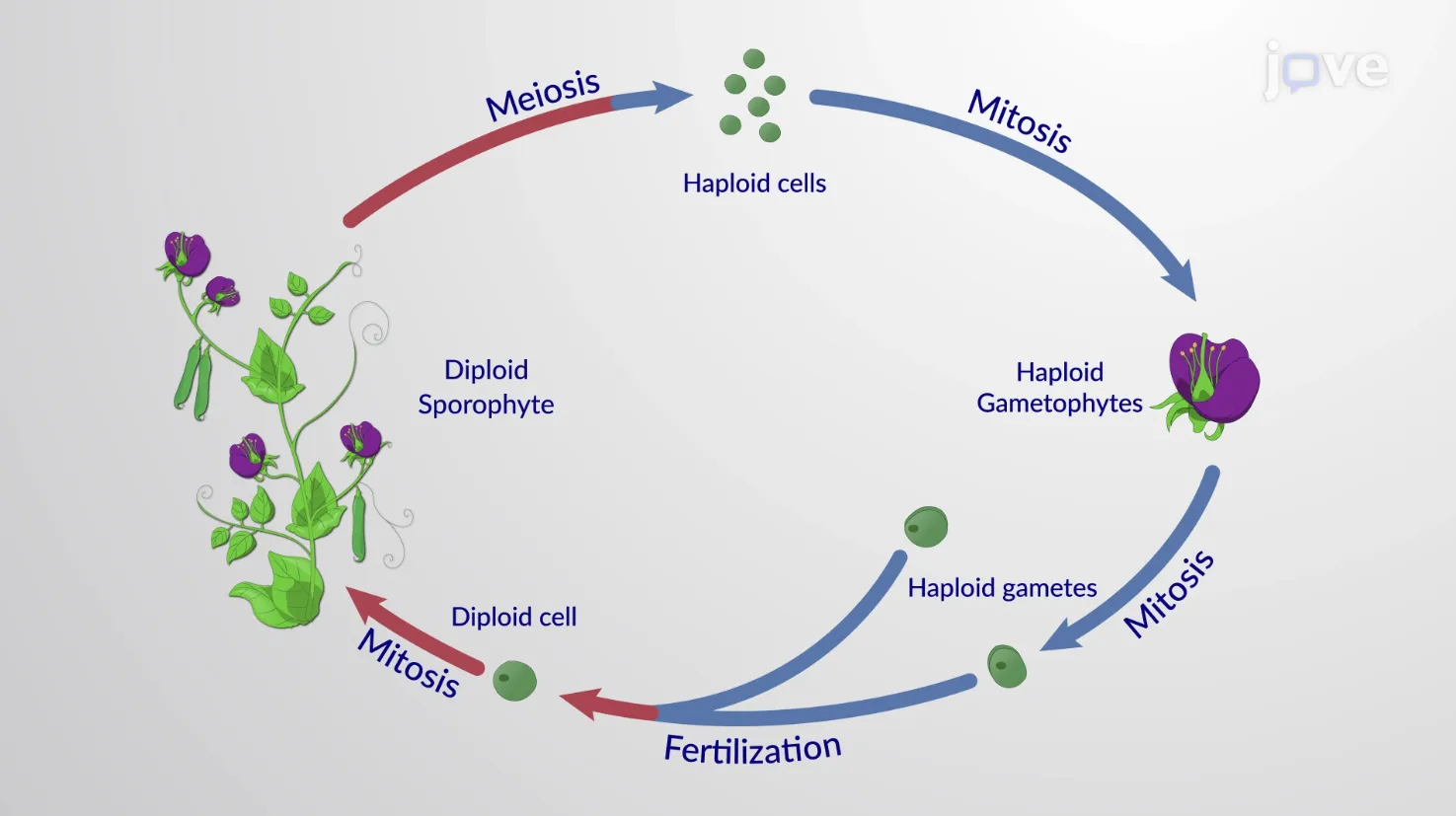
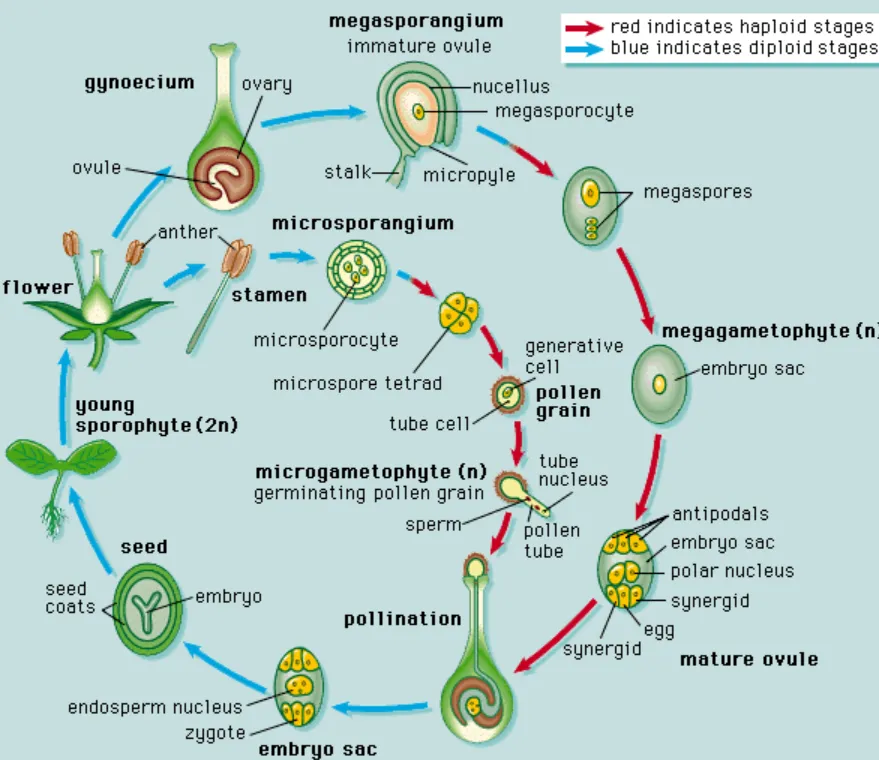
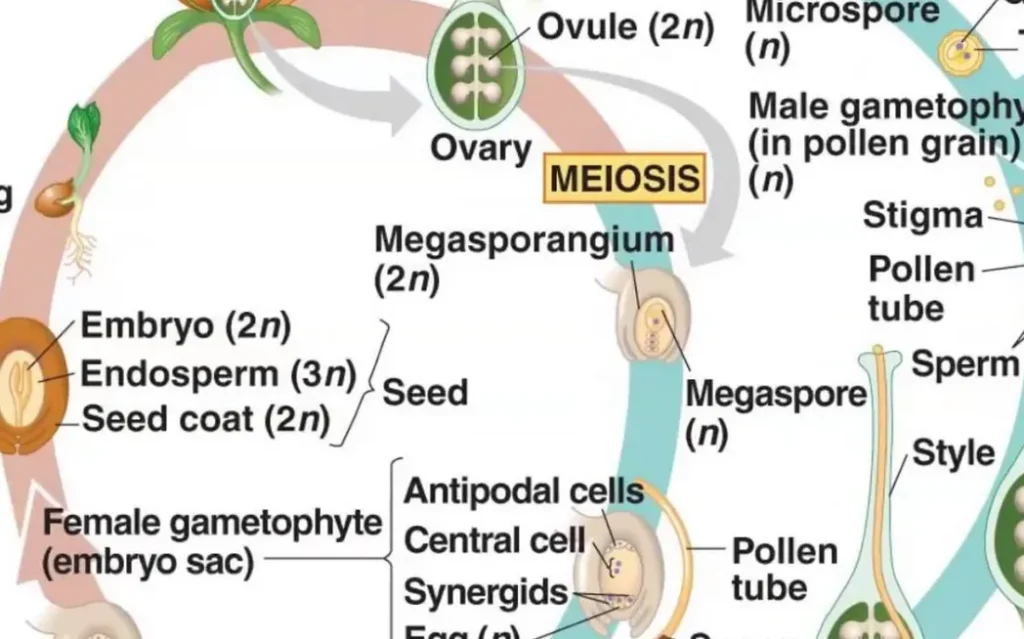
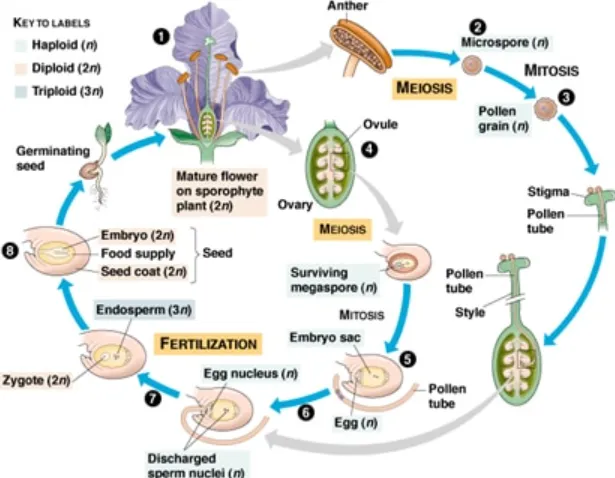
In simple terms, the Angiosperm life cycle involves alternating stages between a diploid sporophyte and a haploid gametophyte. This cycle includes Pollination, Fertilization, seed formation, and germination. What makes angiosperms unique is their ability to produce flowers and fruits, which protect seeds and aid in their dispersal.
Understanding this life cycle helps us appreciate how plants reproduce and why they are essential for food, oxygen, and ecological balance.
✅ Quick Answers (Most Common Questions)
1. What is an angiosperm?
An angiosperm is a flowering plant that produces seeds enclosed within a fruit.
2. What are the main stages of the angiosperm life cycle?
Pollination → Fertilization → Seed Formation → Germination → Growth.
3. Why are angiosperms important?
They provide food, oxygen, and medicine, and maintain ecosystem stability.
Quick Life Cycle Table
| Stage | Description | Key Function |
| Seed Germination | A seed sprouts into a seedling | Begins new plant life |
| Vegetative Growth | A plant develops roots, stems, and leaves | Photosynthesis and growth |
| Flowering | The plant produces flowers | Reproduction preparation |
| Pollination | Transfer of pollen to the stigma | Enables Fertilization |
| Fertilization | Fusion of male and female gametes | Forms embryo |
| Fruit Formation | The ovary develops into a fruit | Protects seeds |
| Seed Dispersal | Seeds spread to new locations | Ensures survival |
| Dormancy | Seed rests until favorable conditions | Survival mechanism |
Important Things That You Need To Know
Understanding key related concepts helps clarify the angiosperm life cycle. Let’s explore some important LSI keywords:
🌿 What is an Angiosperm?
An angiosperm definition refers to plants that produce flowers and seeds enclosed within fruits. These plants are the most diverse group in the plant kingdom.
🌼 Angiosperm vs Gymnosperm
The difference between gymnosperms and angiosperms lies in seed structure. Gymnosperms produce naked seeds (like pine trees), while angiosperms enclose seeds within fruits.
🌱 Angiosperm Examples
Common angiosperm examples include roses, wheat, mango trees, sunflowers, and grasses. These plants are vital for human survival.
🌿 Define Angiosperm
An angiosperm is a vascular plant that reproduces through flowers and produces seeds inside fruits.
🌸 What is an Angiosperm?
Simply put, what is an angiosperm? It is a flowering plant that completes its life cycle through seeds, fruits, and Pollination.
Angiosperms evolved to become the dominant plant type due to their efficient reproduction and adaptability.
The History Of Their Scientific Naming
The scientific naming of angiosperms has evolved over centuries through botanical research and classification systems.
- The term “angiosperm” originates from Greek words:
- Angion = vessel
- Sperma = seed
- Meaning “enclosed seed.”
- Early classification began with Carl Linnaeus in the 18th century, who grouped plants based on reproductive structures.
- Later, botanists refined classifications using:
- Flower structure
- Seed formation
- Embryo development
- Angiosperms were officially distinguished from gymnosperms due to their enclosed seeds.
- Modern classification uses genetic data (DNA sequencing), placing angiosperms in the clade Magnoliophyta.
- Today, angiosperms are divided into:
- Monocots (e.g., grasses)
- Dicots (e.g., roses)
This scientific evolution reflects the deepening of our understanding of plant biology over time.
Their Evolution And Their Origin
Angiosperms first appeared approximately 140–160 million years ago during the late Jurassic to early Cretaceous period. Their sudden diversification puzzled scientists and was famously referred to by Charles Darwin as an “abominable mystery.”
The origin of angiosperms is linked to ancient seed plants that evolved specialized reproductive structures. Over time, these plants developed flowers, which significantly improved reproductive efficiency.
Key evolutionary advancements include:
- Development of flowers to attract pollinators
- Formation of fruits to protect seeds
- Efficient vascular systems for nutrient transport
- Faster reproductive cycles compared to gymnosperms
Fossil evidence shows early angiosperms resembled simple flowering plants. Over millions of years, they diversified into thousands of species.
Environmental factors also played a major role:
- Climate change favored plants with faster reproduction
- Pollinators like insects co-evolved with flowering plants
- Seed dispersal mechanisms improved survival rates
Today, angiosperms make up nearly 80–90% of all plant species on Earth. Their adaptability allowed them to thrive in deserts, forests, grasslands, and aquatic environments.
Their Main Food and Its Collection Process
Angiosperms are autotrophic organisms, meaning they produce their own food through photosynthesis.
🌞 How They Make Food
- Use sunlight as an energy source
- Absorb carbon dioxide (CO₂) from the air
- Take water from the soil via the roots
- Produce glucose (food) and oxygen
🌿 Food Collection Process
- Photosynthesis in Leaves
- Chlorophyll captures sunlight
- Converts light energy into chemical energy
- Water Absorption
- Roots absorb water and minerals
- Transported through xylem vessels
- Gas Exchange
- Stomata allow CO₂ intake and oxygen release
- Food Transport
- Phloem distributes sugars to all plant parts
🍃 Storage of Food
- Roots store starch (e.g., carrots)
- Fruits store sugars (e.g., mango)
- Seeds store nutrients for the embryo
🌼 Adaptations for Efficiency
- Broad leaves for maximum sunlight
- Deep roots for water access
- Seasonal leaf shedding to conserve energy
This efficient system allows angiosperms to survive in diverse environments.
Their Life Cycle and Ability to Survive in Nature
🌱 Germination Stage
The life cycle begins when a seed absorbs water and sprouts into a seedling.
🌿 Vegetative Growth
The plant develops roots, stems, and leaves, enabling photosynthesis and growth.
🌸 Flowering Stage
Flowers form reproductive organs:
- Stamens (male)
- Carpels (female)
🐝 Pollination
Pollen is transferred to the stigma by wind, insects, or animals.
🌾 Fertilization
A unique process called double Fertilization occurs:
- One sperm fertilizes the egg → embryo
- Another form of endosperm → nutrient supply
🍎 Fruit and Seed Formation
The ovary develops into a fruit, protecting the seeds.
🌍 Survival Strategies
- Seed dormancy during harsh conditions
- Wide dispersal methods (wind, water, animals)
- Rapid reproduction cycles
These strategies ensure angiosperms thrive across ecosystems.
Their Reproductive Process and Raising Their Children
Angiosperms reproduce sexually through flowers.
🌼 Reproductive Process
- Flowers contain male and female organs
- Pollen grains carry male gametes
- Ovules contain female gametes
🐝 Pollination Methods
- Insects (bees, butterflies)
- Wind
- Birds and animals
🌱 Fertilization
- Double Fertilization ensures efficient reproduction
- Produces both an embryo and a food reserve
🌿 Seed Development
- Seeds contain:
- Embryo
- Nutrients
- Protective coat
🌳 “Raising Their Children.”
Plants do not care for offspring like animals, but they ensure survival by:
- Producing many seeds
- Protecting seeds inside fruits
- Dispersing seeds to safe locations
🌍 Seed Dispersal Methods
- Wind (light seeds)
- Water (floating seeds)
- Animals (fruits eaten and spread)
This system maximizes the survival chances of new plants.
Importance of Them in this Ecosystem
🌍 Oxygen Production
Angiosperms produce oxygen through photosynthesis, which is essential for life.
🌱 Food Source
They provide:
- Fruits
- Vegetables
- Grains
🐝 Support for Wildlife
- Provide nectar for pollinators
- Offer habitat for animals
🌿 Soil Protection
- Roots prevent erosion
- Improve soil fertility
🌎 Climate Regulation
- Absorb carbon dioxide
- Help reduce global warming
Angiosperms are the backbone of most ecosystems.
What to Do to Protect Them in Nature and Save the System for the Future
- 🌱 Promote tree planting and reforestation
- 🚫 Reduce deforestation and illegal logging
- 🌍 Protect natural habitats and biodiversity
- 💧 Use sustainable farming practices
- 🐝 Protect pollinators like bees
- ♻️ Reduce pollution and chemical use
- 🌿 Support conservation programs
- 📚 Educate people about plant importance
- 🌳 Preserve native plant species
- 🌾 Encourage organic agriculture
Protecting angiosperms helps maintain ecological balance and ensure future sustainability.
Frequently Asked Questions (FAQs)
1. What is the angiosperm life cycle?
It is the process of growth, reproduction, and seed formation in flowering plants.
2. What makes angiosperms unique?
They produce flowers and seeds enclosed within fruits.
3. What is double Fertilization?
A process where two sperm cells fertilize different parts of the ovule.
4. How do angiosperms reproduce?
Through Pollination and Fertilization in flowers.
5. What are examples of angiosperms?
Rose, sunflower, wheat, mango, and grass.
6. How do angiosperms survive harsh conditions?
Through seed dormancy and adaptation mechanisms.
7. Why are angiosperms important?
They provide food, oxygen, and ecological balance.
8. What is the difference between angiosperms and gymnosperms?
Angiosperms have enclosed seeds, while gymnosperms have naked seeds.
Conclusion
The angiosperm life cycle is a remarkable process that highlights the complexity and efficiency of flowering plants. From seed germination to reproduction, each stage is carefully designed to ensure survival and growth.
Angiosperms dominate our planet because of their adaptability, efficient reproduction, and ability to form symbiotic relationships with pollinators. They are not only essential for ecosystems but also for human life, providing food, medicine, and oxygen.
Understanding their life cycle helps us appreciate their importance and encourages us to protect them. By conserving angiosperms, we safeguard biodiversity, maintain ecological balance, and ensure a sustainable future for generations to come.
Also Read About: sunflower life cycle